The Texas State Opener brings the Bobcats to Austin on Saturday, September 5, 2026, for a 2:30 p.m. CT kickoff against Texas at Darrell K Royal–Texas Memorial Stadium, with ESPN carrying the game nationally, according to Texas Athletics game details. For Texas State supporters, this is more than a season-opening road trip. It is a measuring point against one of the state’s largest programs, a high-visibility broadcast window, and the first public read on how the Bobcats handle the tone of a new football year.
The Texas State Opener Starts With A Clear Stage
How The Texas State Opener Fits The New Season
Season openers can be strange assignments. Coaches want clean operation, healthy rotations and teachable film. Players want a chance to set an identity before the schedule begins to stack up. Fans want a reason to believe the winter and spring work has translated. This opener offers all of that, with a larger state audience watching.
The confirmed logistics make planning simple at the top line: Saturday afternoon in Austin, national television, and a venue that will ask Texas State to handle crowd noise, heat, and the pace of a major college football setting. For many Bobcat families, alumni and students, the trip from San Marcos to Austin is close enough to feel local, but the setting will not feel routine.
That is the central tension of the matchup. Texas State does not need to treat the trip as a program referendum, but it cannot treat it as just another nonconference date either. A 2:30 p.m. kickoff gives the Bobcats a full afternoon stage, and ESPN coverage means the performance will travel far beyond Central Texas. The first quarter matters because it can settle nerves. The middle eight minutes before halftime matter because that is often where road underdogs lose structure. The closing stretch matters because conditioning and special teams tend to show up late in openers.
What The Broadcast Window Means Locally
For San Marcos, the broadcast piece has real value. A national window gives former students, local recruits, families and high school coaches across Texas a clear look at the program. That visibility does not guarantee a result, but it does create a recruiting and community moment. When a local program appears on a national channel against Texas, every possession becomes part of a larger conversation about where the Bobcats are headed.
For broader schedule context, the opener also sits at the front of a month that will shape the Bobcats’ new chapter, a point explored in our breakdown of Texas State’s September schedule. The Austin trip is the first public checkpoint before the rhythm of the season takes hold.
What The Bobcats Must Carry Into Austin
Offensive Timing Has To Travel
Opening games often expose timing before they reveal identity. Texas State will need the offense to avoid wasted early downs, protect the ball, and keep the sideline from spending too much time under stress. Against a roster with Texas’ size and speed, empty possessions can pile up quickly if the Bobcats fall behind schedule.
The available research points to Texas State’s offense as one of the program’s strengths, while also flagging special teams and certain depth questions as areas that could matter. Sports Illustrated framed the Bobcats as a team with a dynamic offense and resilient defense, while identifying special teams and depth as possible concerns in its Texas State matchup analysis. That is a fair football lens for this game: the Bobcats have to create enough stress offensively to keep Texas from playing downhill all afternoon.
That does not mean Texas State has to chase points recklessly. A composed offense can help the defense by extending drives, changing field position and limiting quick return trips for the Longhorns. The first series may draw the loudest emotional reaction, but the second and third possessions often say more about preparation. Has the offensive staff found answers after seeing Texas’ first calls? Are protections being adjusted? Are receivers creating space quickly enough for the quarterback to play on time? Those are the details local fans should watch closely.
Defensive Poise Can Keep The Game Honest
For the Bobcats, defensive resilience starts with tackling and spacing. A season opener in Austin is not the place to donate yards after contact or lose contain on routine plays. Texas State’s defense has to make Texas earn long drives rather than handing over short fields through missed fits or penalties.
The most realistic path to staying competitive is not built on one highlight play. It is built on forcing third downs, avoiding explosive gains, and turning one or two pressure moments into field-position swings. If the Bobcats can make Texas repeat execution through long possessions, the game becomes more about discipline than pure athletic margin. That is where an opener can narrow slightly, especially if Texas State’s sideline manages tempo and substitutions well.
Game-Day Planning For A 2:30 Kickoff
Travel Timing From San Marcos Matters
For fans making the short drive north, the 2:30 p.m. start creates a different day than an evening kickoff. The best plan is to treat it as an all-day road event, not a quick afternoon drop-in. Austin traffic, stadium entry, parking patterns and the usual early-season heat can make the final few miles slower than expected.
Supporters should build in time for parking, walking to the stadium, security screening and water breaks. Families traveling with children or older relatives may want to arrive early enough to avoid rushing in the heaviest pregame crowd. The official ticket and game information is being handled through Texas Athletics, and fans should rely on university channels for current entry details, seating information and stadium policies tied to the event.
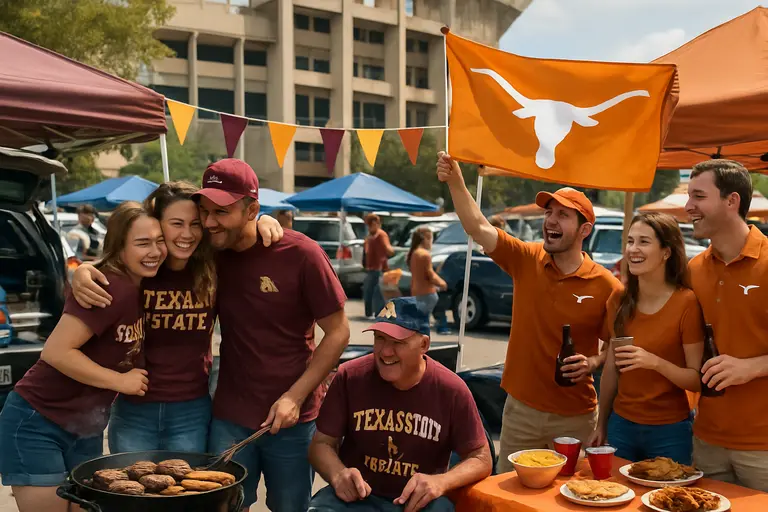
For Texas State fans, the Texas State Opener also carries a community feel because the opponent is close enough for a visible Bobcat turnout. Alumni chapters, student groups and families across Hays County will have a chance to turn a road opener into a regional gathering. That matters. A strong visiting presence does not change the scoreboard by itself, but it gives players a familiar sound in an otherwise burnt-orange setting.
Heat And Hydration Should Shape The Day
Early September football in Central Texas asks fans to prepare. The confirmed afternoon kickoff means sun exposure and hydration should be part of every travel plan. Practical choices matter: light clothing, early meals, water before entering the stadium area and patience moving through crowds. This is not just comfort advice. It affects whether families enjoy the full game or spend the second half managing fatigue.
The same conditions will test players. Openers often reveal which teams can sustain pad level, communication and substitution discipline when legs get heavy. Texas State’s sideline operation will be worth watching, especially on long Texas drives or after sudden-change moments.
The In-State Weight Around This Matchup
A Road Test With Local Stakes
Texas State and Texas occupy different football spaces, but the in-state angle gives the game a local charge. For Bobcat players from Texas high school programs, games like this can carry personal meaning. Many grew up around Longhorn coverage, played with or against athletes who landed at power programs, or know families split between schools. That familiarity can sharpen focus if it is handled correctly.
From a team-performance view, the key is emotional control. Texas State cannot afford pregame energy that fades after one defensive stop or one early mistake. Road openers reward teams that can absorb the first surge and keep playing through routine football problems: a loud third down, a penalty, a missed tackle, a stalled drive. Those moments do not decide the game alone, but they reveal whether a team is prepared to compete snap by snap.
The available public research gives clear schedule information and broad matchup themes, but it does not provide verified, current depth-chart specifics for both teams. That leaves some uncertainty around individual matchups. Rather than guessing, the better preview angle is structural: Texas State needs ball security, special teams stability, defensive tackling and enough offensive rhythm to make Texas defend the full field.
Why The Texas State Opener Matters In San Marcos
The First Impression Can Travel
The Texas State Opener matters because first impressions can shape how a season is discussed locally. A clean, competitive effort in Austin would give the Bobcats a useful starting point. A messy afternoon would not end the season, but it would put more pressure on corrections before the next stretch of games. Either way, coaches will come home with honest film.
For the fan base, this is a chance to show up for a nearby road game and take the program’s ambitions into one of the state’s biggest football venues. Texas State does not need empty hype around this matchup. The assignment is difficult enough on its own. What the Bobcats need is poise, execution and a traveling crowd that treats the opener as part of the program’s local rise.
By kickoff, the talking points will narrow to blocking, tackling, field position and composure. That is where this game will be judged. The Texas State Opener gives San Marcos a clear early-season barometer, and it gives the Bobcats an immediate opportunity to show what kind of team they are prepared to become in 2026.