Think you can just show up and dazzle coaches with your raw talent? Think again. The journey to becoming a collegiate athlete without a scholarship is more strategic chess match than spontaneous playground game.
It starts months before campus arrival with what I call the “athletic courtship letter” – part resume, part manifesto, entirely calculated. This isn’t just emailing coaches; it’s your opening argument in a trial where the jury wears polo shirts and carries stopwatches.
The bureaucratic hurdles feel like something Kafka would design if he coached football. NCAA paperwork, physical exams, insurance forms – it’s the warm-up lap before the actual race begins. When tryout day arrives, you’re not just being evaluated on your 40-time or vertical leap. They’re measuring your coachability, your resilience, and whether you’ll seethe internally when criticized.
Want to maximize your chances? Our complete guide to walk-on success breaks down everything from preferred walk-on status to turning scout team duty into playing time. Because in this game, the final whistle doesn’t blow when tryouts end – it’s just halftime in your athletic career.
Required Skills and Drills
The idea of making a Division I roster through an open tryout process is tough. It’s not just about competing with others. You’re up against the best of the best from high school.
To succeed, you need to be good at sports, have the right attitude, and do well in school. It’s like applying for two jobs at once. You’re trying to be a top athlete and a dedicated practice player.
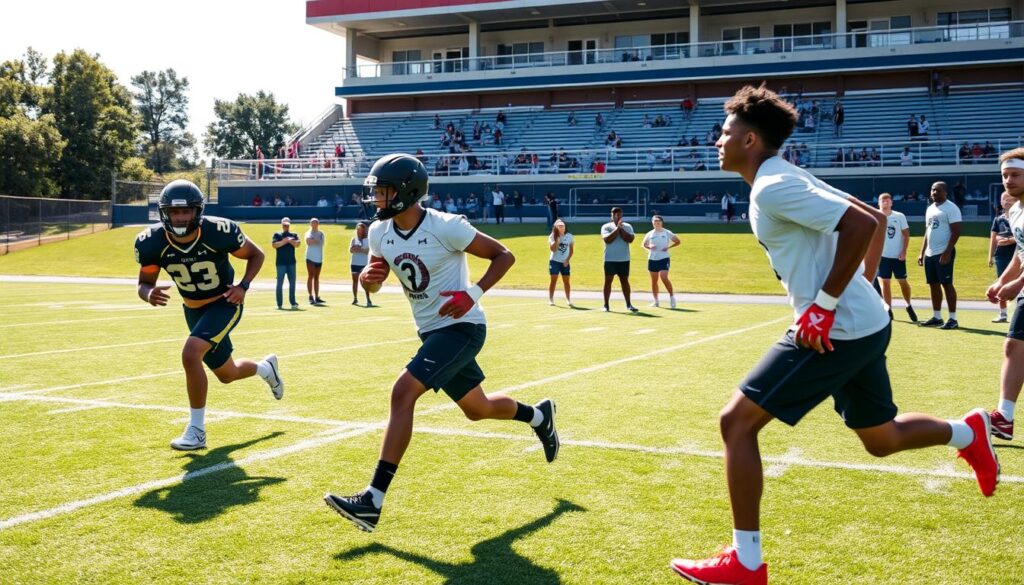
Coaches aren’t looking for the next big star at tryouts. They want someone who can do many things well. Can you rebound, play special teams, and run scout team with ease?
Being good at these specific skills can get you on the roster. Walk-ons are like applying for two jobs: being a Division I athlete and a practice player.
Here’s what sets the good ones apart:
| Athletic Dimension | What Coaches Actually See | How to Demonstrate It |
|---|---|---|
| Position-Specific Skills | Technical precision over flashy plays | Execute fundamental drills perfectly |
| Football IQ | Ability to process information quickly | Make the right read without hesitation |
| Special Teams Value | Willingness to do dirty work | Volunteer for kick coverage drills |
| Scout Team Excellence | Ability to make starters better | Perfectly mimic next opponent’s plays |
| Consistency | Dependability under fatigue | Perform drill #10 as well as drill #1 |
Things you can’t measure are often more important. Coaches notice who shows up early and stays late. They pay attention to your attitude, even during breaks.
Training should be like what scholarship athletes do, not some fancy workout plan. Ask coaches for specific football tryout drills. This shows you’re smart and eager to learn.
You’re not just selling your athletic skills. You’re selling reliability, coachability, and emotional smarts. The walk-on who makes the team is often the most useful, not the most talented.
In college football, being a great team player is more valuable than being a star. Your worth is in making others better. That’s the secret to success in the open tryout process.
Interviews with Past Walk-Ons
What do a pizza delivery guy, an overlooked recruit, and a team manager have in common? They all rewrote the definition of how to make roster through sheer force of will.
J.J. Watt wasn’t just delivering pizzas – he was delivering a masterclass in persistence. Baker Mayfield’s journey from unwanted to unstoppable reads like a sports version of a Rocky montage. And Scottie Pippen? The man went from fetching towels to becoming basketball royalty. Their stories aren’t exceptions – they’re blueprints.

I’ve spoken with walk-ons who treat rejection like a seasonal allergy – annoying but temporary. One rower tried out three times before earning her spot. A football player worked as an equipment manager for a year, studying plays while folding jerseys. Their secret? They understood that how to make roster isn’t about one glorious moment – it’s about a thousand invisible ones.
International students face an additional obstacle course. Visa issues, funding gaps, and cultural adjustments make their journey even more impressive. One international walk-on I interviewed balanced 6 AM practices with maintaining the grades needed for academic aid. His motivation? “I didn’t come this far to only come this far.”
The common thread? Creative hustle. Summer camps become auditions. Manager positions turn into foot-in-the-door opportunities. Every water bottle handed out is a chance to demonstrate coachability. As highlighted in recent Penn athletics coverage, this approach separates the temporary from the transformational.
Their advice boils down to theatrical commitment. Treat scout team like Broadway. Approach practice like it’s opening night. Your value might initially be measured in how you make the star player better – until suddenly, you become the star player.
It’s the athletic equivalent of method acting. You have to believe you belong there long before anyone else does. The walk-on mindset isn’t about waiting for an opportunity – it’s about building the door yourself, then walking through it.
Coach Perspective
From the coaching box, the walk on tryout process is not charity. It’s a smart way to find talent. Coaches look for players who might not be top stars but offer unique skills.
Choosing players is more than just looking for talent. Coaches want players who fill gaps, improve team GPA, and make practices better. They seek players who can do specific jobs well, like a practice squad quarterback or a special teams player.
Successful walk-ons know they’re auditioning for specific roles. Coaches value players who solve problems and bring energy without needing the spotlight. This is explained in a coach’s tryout guide that focuses on how players fit into the team.
The smartest walk-ons come with humility and thorough preparation. They understand their role might start with supporting the starters. In the coach’s mind, these players are smart investments. They might not pay off right away, but they can bring big rewards when the time is right.