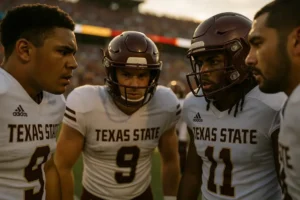
I watched the early signing period feel less like paperwork and more like a declaration. Nineteen additions landed in the 2026 recruiting class, and the buzz was deserved. Two bowl wins and back-to-back 8-5 seasons turned momentum into a tangible wave.
I’ll give you a clean breakdown of the newest texas state football commits: who they are, what their film shows, and why measurables matter beyond highlight reels.
This is not fan fiction. I’ll link projected roles to depth-chart needs and explain which recruits could play early and which are long-term investments. Think roster math, not just star power.
Teaser: Lakeyelon Graves is the marquee athlete, with upside pieces at quarterback, wide receiver, and edge. The class reads less like a nice haul and more like a program-level inflection point.
Read on for context, player-by-player analysis, and the logic behind building a group that can actually change outcomes.
Texas State’s 2026 recruiting class outlook after the early signing period
What arrived in san marcos during the early signing period looks less like luck and more like plan. The 2026 recruiting class finished as the best in program history, landing a No. 62 spot in the 247Sports composite.
That No. 62 ranking isn’t Alabama territory, but for this program it’s a milestone. Context matters: the composite shows the top four prospects in program history clustered in one class. That is why local media called it “historic.”
The early national signing period was a three-day sprint, with Feb. 4 as the cleanup date for late intent and drama. The class took some hits — two three-star decommitments and a cornerback flip — yet it held together.
Why now? Two bowl wins and back-to-back 8-5 seasons, plus a Pac-12 invite, gave recruits tangible résumé value. Coaching staff presence mattered too; the head coach and key assistants closed offers and sold a believable path.
Why this group is being called a historic haul in San Marcos
Because the program stacked its four highest-rated prospects in one recruiting cycle — a rare alignment that changes expectations.
Where the class ranks in the 247Sports composite and among Pac-12 programs
- No. 62 nationally per 247Sports composite.
- Placed second or third among pac-12 programs, depending on the report.
Rankings make headlines, but roles make Saturdays. Next up: how these players fit on game day and which recruits can contribute early.
Texas state football commits: key player profiles and projected roles
This class reads like a chessboard of fit pieces — each recruit solves a clear roster problem. I’ll walk through who projects to start, who will push immediately, and which names are long-term assets.
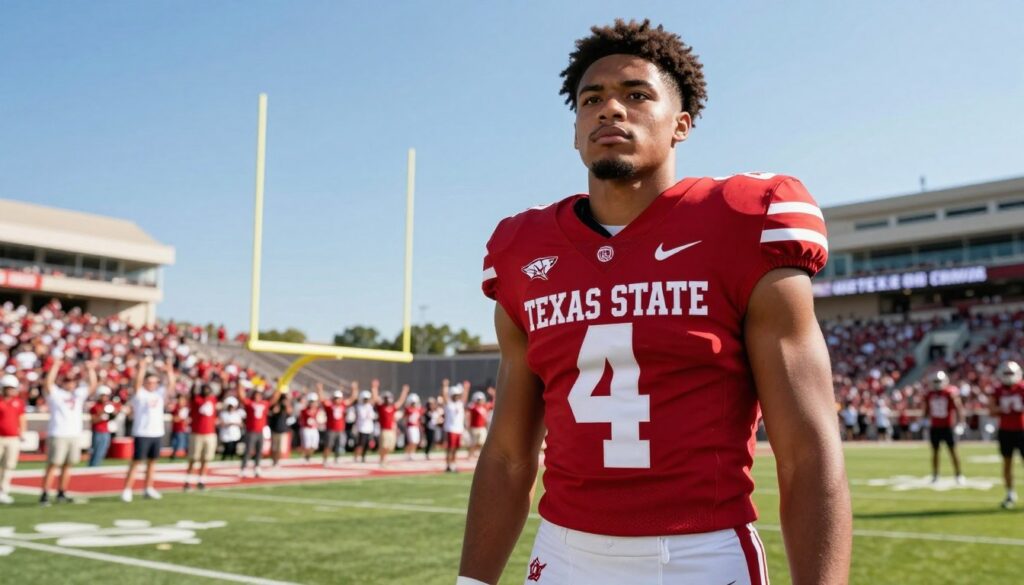
Lakeyleon Graves — the four-star athlete
Lakeyleon Graves is the marquee prospect: a 6’2″, 185 athlete with 48 catches for 987 yards and 13 touchdowns, plus 136 tackles and splash plays on defense. The staff pitched a two-way vision after offers from Missouri, Houston, and Wake Forest. Start him at receiver; keep the defensive door open.
Skill, QB and front-seven snapshots
Xavier Warren (No. 60 WR) brings clean route craft and early-contributor buzz. Easton Webb (No. 42 QB) finished with 8,605 passing yards and 83 touchdowns — proven production you can hand the playbook to.
Darius Davis, the local product, could see the field fast at linebacker. Cullen Thompson logged 17 TFL and 9 sacks as a junior; that pass-rush pedigree matters now.
Depth and special teams
JUCO additions like Jayden Luckett and Amari Smith give immediate trench depth. Complementary pieces—Blake McLane, Dameon Crowe, Jayden Flournoy, Juntavious Harris, and punter Tom Flintoff—round out a class built for both present snaps and future growth.
How the 2026 recruiting class fits Texas State football’s roster build and momentum
The roster shift this cycle feels less like luck and more like a deliberate, upward trajectory. Two bowl wins and consecutive 8-5 seasons changed the narrative. Winning made the program a viable stop on many prospect lists.
Perception matters. The No. 62 ranking in the 247sports composite is proof that the program now shops where it used to window-shop. That composite isn’t vanity — it rewrites recruiting behavior across the nation.
Staff, region ties, and who closes
GJ Kinne’s East Texas roots gave the staff cultural literacy in key pipelines. Knowing Gilmer and its community mattered as much as a highlight reel.
Receivers coach Randy Martinez and GM Justin Owens were named in multiple conversations as the closers on big prospects. Modern recruiting looks like a small front office with headsets, not a solo salesman.
Balancing recruits, transfers, and retention
High school signees set the long-term foundation. Transfers patch immediate holes. Retention keeps the group stable, especially with the portal opening Jan. 2.
Roster stability is quiet power. Programs now sell continuity as loudly as they sell facilities.
Immediate needs met by this class
This class adds edge rushers for third-down havoc, a QB pipeline with Easton Webb, and bigger targets at receiver to complement speed types like Crowe.
| Need | How addressed | Key names |
|---|---|---|
| Pass rush | High school and JUCO adds with TFL/sack pedigree | Cullen Thompson, JUCO depth |
| Quarterback pipeline | Proven passer with development timeline | Easton Webb |
| Receiver size & speed | Mix of big targets and quick separators | Lakeyleon Graves, Blake McLane, Dameon Crowe |
Want deeper context on athlete profiles and multi-sport backgrounds? Check this look at dual-threats & multi-sport athletes for how versatility plays into recruiting decisions.
Conclusion
This recruiting class reads less like a lucky streak and more like an earned identity shift for the program.
The No. 62 ranking nationally caught attention, but the position mix—quarterback depth, edge rushers, receiver size, and trench help—explains why optimism feels founded, not caffeinated.
San Marcos matters here: stacking higher-rated prospects changes a school’s expectations, not just Saturday lineups. A few February letters of intent still hang in the balance, and those final signatures will lock the picture.
Bottom line: if this class pairs with smart retention and targeted portal moves, the Pac-12 transition starts to look less like a gamble and more like a planned step. For the broader nation, this group signals a program moving from sleeper to legitimate contender.
Read more context on the Pac-12 move and recruiting implications here.