The Texas State Pac-12 Debut arrives with a short road trip and a major stage. Texas will host Texas State on Saturday, September 5, 2026, at 2:30 p.m. CT at Darrell K Royal-Texas Memorial Stadium in Austin, with ESPN carrying the broadcast, according to the University of Texas’ home-game announcement. For Bobcat supporters in San Marcos, the matchup is more than a season opener. It is the first public measuring point for a program moving from the Sun Belt into a rebuilt Pac-12.
Texas State Pac-12 Debut Opens In Austin
Texas State does not have to travel far for its first Pac-12-branded football Saturday, but the football assignment is a large one. Austin gives the Bobcats a familiar regional setting, a national broadcast window, and an opponent with a much larger national profile. That combination creates pressure, but it also gives the program a clean chance to show what has changed around the team.
Texas State Pac-12 Debut Matchup Facts
The confirmed game details are straightforward, which helps families, alumni, students, and road-game travelers plan early:
- Matchup: Texas State at Texas
- Date: Saturday, September 5, 2026
- Kickoff: 2:30 p.m. CT
- Venue: Darrell K Royal-Texas Memorial Stadium in Austin
- Broadcast: ESPN
The schools have met only once before in football. Texas State was then known as Southwest Texas State Teachers College, and Texas won 36-0 in Austin in 1930, per the same Texas announcement. That long gap matters because this is not a rivalry with recent on-field memory. The 2026 meeting will create a new reference point for younger Bobcat fans and for a San Marcos program entering a different conference tier.
The First Quarter Will Tell Us Plenty
Opening games often produce uneven moments, especially when one team is stepping into a new league identity. For Texas State, the first quarter in Austin should show how prepared the Bobcats are to handle tempo, crowd noise, and early physical stress. The score will matter, but the more useful read may come from how the Bobcats communicate before the snap, protect the football, and avoid giving Texas short fields.
The Texas State Pac-12 Debut is also a scouting checkpoint for the roster. Without leaning on unverified depth-chart claims, the key areas are clear: offensive line stability, quarterback decision-making, tackling space, and special teams composure. Those are the kinds of travel-proof traits that tend to carry into conference play, especially when a team is about to face new opponents and longer trips.
What The Texas Matchup Says About Team Growth
Texas State’s move to the Pac-12 was part of the conference’s expansion effort, with NBC Sports reporting that the Bobcats became the league’s needed eighth football school and joined a group that includes other additions such as Boise State and Fresno State in its report on the Pac-12 rebuild. That context matters locally because this is not just a schedule swap. It changes the week-to-week standard, the travel map, and the way the Bobcats are viewed outside Central Texas.
A Bigger Platform Without A Free Pass
The opener at Texas gives the Bobcats exposure, but it does not hand them credibility. That has to be earned through snaps. A competitive performance would not require perfection. It would require the Bobcats to play with structure: limit assignment errors, sustain drives long enough to rest the defense, and turn scoring chances into points when they appear.
Texas, on the other side, gives Texas State a difficult first test because the Longhorns are used to high-attention games and large home crowds. The Bobcats’ response to that setting will help frame how coaches evaluate the roster before the rest of September. If rotations settle quickly and the sideline avoids panic after early adversity, that is a positive sign even before the box score is fully judged.
Where Player Development Shows Up
Player development is often discussed during recruiting cycles, but games like this reveal it in plain view. Can young defensive backs keep leverage against faster route combinations? Can reserve linemen handle a second-half series without communication issues? Can skill players win one-on-one moments when the opponent takes away the first read?
Those answers matter for San Marcos because Texas State’s new league schedule will ask more of the full roster. The debut is not simply about starters making plays on ESPN. It is about whether the second wave of players can keep the game plan intact. That is where roster depth becomes real, and it connects directly to our continuing coverage of Texas State roster depth as the Bobcats prepare for a tougher conference schedule.
Fan Planning Between San Marcos And Austin
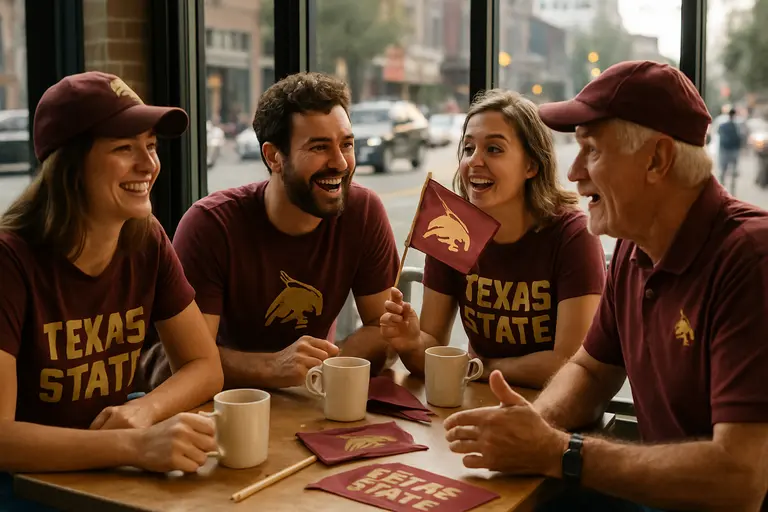
For local supporters, this opener is one of the easiest high-profile road trips Texas State could draw. San Marcos to Austin is close enough for day travel, but the 2:30 p.m. kickoff still requires planning. Heat, traffic near campus, parking demand, and postgame congestion can all shape the experience, especially for families and alumni groups making the trip together.
Why The Road Trip Matters To The Community
A strong Bobcat presence in Austin would carry meaning beyond the stadium. Road support shows recruits, high school coaches, former players, and local businesses that the move into the Pac-12 has real energy behind it. It also gives Texas State a chance to present itself as more than a visiting underdog. The program can bring San Marcos identity into one of the state’s largest college football settings.
That community piece should not be brushed aside. Texas State football has a local base that includes students, recent graduates, long-time alumni, and Central Texas families who have watched the program grow through different conference stops. The Austin opener gives those groups a shared date on the calendar. Our related preview of the Texas State opener at Texas focuses more closely on kickoff context and travel themes for that weekend.
What To Watch After The Opener
The Austin game will be judged quickly, but the staff’s response afterward may be just as valuable. Coaches will have film against a high-end opponent, and that film can guide personnel choices before the next phase of the schedule. If the Bobcats find areas of strength, they can build on them. If weaknesses show up, the value comes from fixing them before Pac-12 play creates new stress.
Supporters should watch for whether Texas State exits the game with a clear offensive identity, reliable defensive communication, and defined special teams roles. Those pieces can steady a team during a season that will ask it to play in new places against opponents with different styles.
Why Texas State Pac-12 Debut Matters Locally
This matchup matters because it puts Texas State’s new era in front of the same region that has watched the Bobcats climb. The opponent is Texas, the broadcast is ESPN, and the venue is one of the most visible football stages in the state. That combination makes the opener a community event as much as a football test.
For the team, the goal is not to win a press conference or make realignment sound impressive. The goal is to show habits that can survive a longer season: clean substitutions, disciplined tackling, confident quarterback operation, and enough depth to handle a physical road game. Those are practical football markers, and they will say more than any preseason talking point.
A composed Texas State Pac-12 Debut would give the Bobcats a stronger base for the weeks that follow. A rough one would still provide useful film, but it would raise urgent questions about how fast the roster can adjust. Either way, September 5 in Austin gives San Marcos a first look at what this new chapter can become once the Bobcats stop talking about the Pac-12 and start playing under that banner.