Jason Robertson’s new contract gives the Dallas Stars certainty for the 2026-27 season without resolving the larger question hanging over one of the NHL’s most productive scorers.
Dallas signed Robertson to a one-year, $12 million contract on July 22, avoiding a scheduled salary-arbitration hearing and keeping its leading scorer inside a roster built to compete for the Stanley Cup now. The agreement followed a 2025-26 season in which Robertson recorded 45 goals and 51 assists across all 82 regular-season games. His 96 points led the Stars and represented the second-highest total of his career.
The contract is significant for what it preserves. Dallas did not have to trade a prime-age scorer to escape its salary-cap pressure. Robertson did not have to leave a team that has reached the Western Conference Final three times in four seasons. General manager Jim Nill retained the central pieces of a deep forward group while giving the organization time to revisit a longer agreement after January 1.
It is equally significant for what it does not provide. Robertson is under contract for only one season. Tyler Seguin is entering the final year of his deal. Jamie Benn has returned on another short-term contract. Several key players have accumulated heavy playoff workloads, and Dallas remains close to the salary-cap ceiling.
The Stars have bought another legitimate championship opportunity. They have not bought unlimited time.
Robertson’s Production Made Retention The Priority
Dallas could not approach Robertson as an interchangeable top-six winger. He has become one of the team’s primary offensive drivers and one of the NHL’s most consistent scoring threats.
The 27-year-old winger produced 45 goals during the 2025-26 regular season, matching Wyatt Johnston for the team lead. Robertson added 51 assists and set a career high with 15 power-play goals. He then scored five goals and recorded eight points during Dallas’ six-game first-round playoff loss to the Minnesota Wild.
His scoring history extends beyond one strong contract year. Robertson posted 109 points in 2022-23 and has led Dallas in scoring during three of the past four seasons. He creates value through finishing, offensive positioning, puck protection and an ability to find space away from the puck.
The Stars’ official Robertson contract announcement described him as a franchise cornerstone. That label fits his place in the current roster. Dallas has other elite offensive players, but removing Robertson would have changed the entire forward structure.
Mikko Rantanen and Johnston could still form the center of a productive first unit. Roope Hintz, Matt Duchene, Seguin and Benn would still give Dallas proven options. None of those combinations would fully replace a healthy winger capable of scoring 40 goals and approaching 100 points.
A trade might have returned useful assets or created salary-cap flexibility. It would have weakened the team’s immediate chance to win. Nill chose the current roster over a step backward, which is the clearest sign that Dallas remains committed to its present competitive window.
The One-Year Structure Solves The Immediate Problem
Robertson entered the summer as a restricted free agent after completing a four-year, $31 million contract with a $7.75 million annual average value. He filed for salary arbitration on July 5, creating a formal route toward a one-year award if the sides could not reach an agreement first.
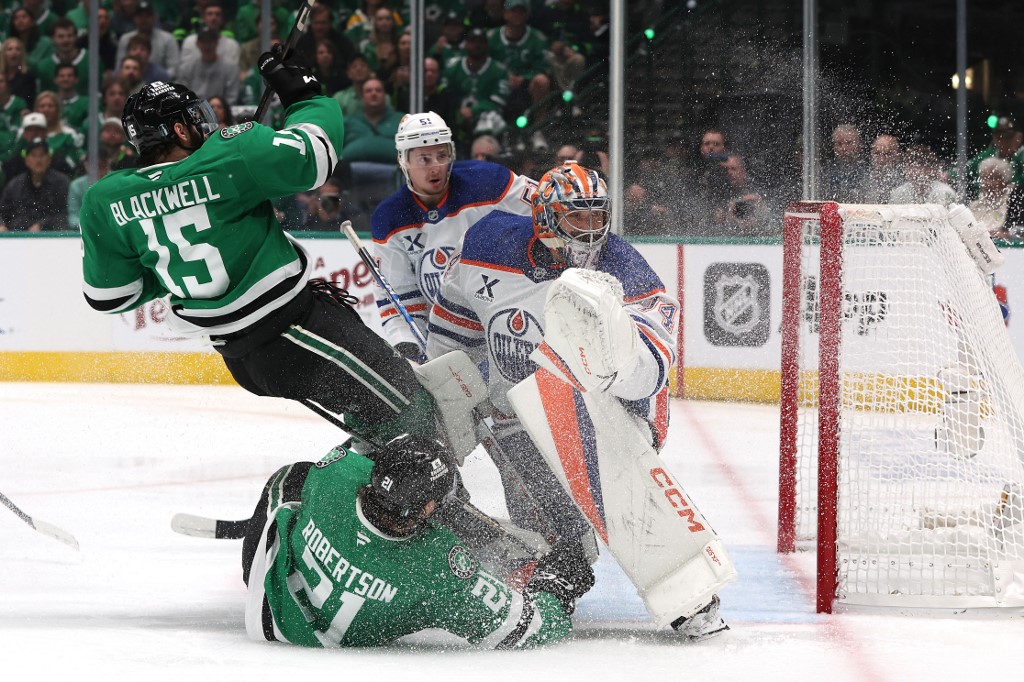
The situation carried several possible outcomes. Dallas could sign Robertson long term, agree to a shorter contract, proceed to arbitration or consider a trade if the requested salary became impossible to fit.
The one-year agreement became the workable middle ground. Robertson received a substantial raise to $12 million, matching Rantanen for the largest annual cap charge on the roster. Dallas avoided an arbitration ruling and preserved a relationship with a player who has repeatedly expressed interest in remaining with the organization.
The Stars’ account of the Robertson negotiations explained the financial pressure behind the decision. Dallas was already near its projected cap limit and could not easily accommodate a larger number for the coming season.
A long-term contract could have required an annual salary beyond the figure Dallas was prepared to use in 2026-27. A one-year deal delays that commitment until the NHL salary cap rises again and Seguin’s $9.85 million cap charge expires.
That timing may create room for a larger Robertson contract next summer. It may create a more difficult negotiation if he produces another elite season and reaches unrestricted free agency. For the moment, the Stars avoided losing a top scorer without forcing an unsustainable long-term number into the current payroll.
The deal is a bridge, but it is a bridge pointed toward another championship attempt.
Dallas Kept Its Deep Forward Structure Intact
Robertson’s return allows Dallas to begin the season with two scoring lines that can challenge almost any matchup structure in the Western Conference.
Johnston and Rantanen are expected to remain together after combining high-end finishing with strong offensive chemistry. Johnston scored 45 goals last season, while Rantanen supplied 55 assists despite an injury-disrupted campaign.
Robertson can anchor another line alongside Hintz and Seguin if both return healthy. Hintz missed the final portion of last season after suffering hamstring injuries. Seguin has played only 47 regular-season games across the past two campaigns after hip surgery and a torn anterior cruciate ligament.
Their health cannot be assumed. Their presence gives Dallas a much higher offensive ceiling when available.
The Stars’ projected 2026-27 lineup places Robertson within a forward group that still includes Duchene, Benn, Sam Steel, Radek Faksa, Oskar Bäck, Colin Blackwell and Joel Kiviranta.
Benn’s return helps preserve that depth. Dallas signed its captain to a one-year contract with an $850,000 base salary and as much as $1.15 million in performance bonuses. He recorded 15 goals and 36 points in 60 games last season despite missing 20 games through injury.
The contract gives Dallas another veteran forward at a manageable cap number. Benn no longer has to carry the offensive responsibilities he handled earlier in his career. He can play lower in the lineup, contribute on special teams and support younger players through another demanding season.
Robertson’s deal makes those roles fit together. Without him, Dallas would need to move several forwards higher in the lineup and ask complementary scorers to replace first-line production.
The Salary Cap Leaves Almost No Margin
Keeping Robertson came at a clear cost. Dallas entered late July with little remaining cap space and limited flexibility to add another established player without moving salary.
The Stars’ official roster analysis estimated that the club had slightly more than $450,000 in available room after Robertson signed. That projection included 13 forwards, six defensemen and two goaltenders. It did not include every younger player Dallas may want on its opening roster.
That constraint can affect decisions involving Arttu Hyry, defensive depth and injury replacements. It may force Dallas to use waivers, short-term assignments or a trade to create enough room for its preferred configuration.
The situation places greater importance on internal development. Justin Hryckowian could receive a larger offensive role. Lian Bichsel and Nils Lundkvist may need to handle more responsibility on defense. Young or inexpensive players must supply meaningful minutes rather than serve only as emergency depth.
Nill has repeatedly built competitive rosters by combining expensive stars with productive players on controlled contracts. Robertson, Rantanen, Thomas Harley, Miro Heiskanen and Jake Oettinger now occupy major portions of the payroll. Johnston will eventually require another significant contract.
Dallas can manage that structure if its younger and lower-cost players contribute. It becomes harder if injuries force the club into the trade market or if several depth positions underperform at once.
The Robertson agreement keeps the Stars strong enough to contend. It does not give them the financial freedom to repair every problem during the season.
The Playoff Standard Has Moved Beyond A Deep Run
Dallas has reached the postseason in five consecutive seasons and appeared in the Western Conference Final three times during the past four years. That record establishes the Stars as one of the NHL’s most consistent contenders.
It creates a harsher standard for 2026-27.
Another playoff qualification would confirm stability but would not represent a major advance. Another conference-final appearance would show continued strength but could still feel incomplete. The current core is now judged by whether it reaches and wins the Stanley Cup Final.
The 2025-26 exit intensified that pressure. Dallas finished the regular season with enough scoring talent to look like a serious contender but lost its opening-round series to Minnesota in six games. Robertson performed well, scoring five times, yet the team could not extend its postseason run.
That early exit provided additional rest after years of heavy playoff mileage. The Stars have played 726 regular-season and playoff games since the start of 2018-19, the second-highest total in the NHL over that period, according to the team’s offseason analysis.
Rest may help Hintz, Seguin, Rantanen and the defensive group return closer to full strength. It does not eliminate the age and injury questions surrounding parts of the roster.
Robertson’s contract keeps the most productive part of the core intact for another attempt. It makes 2026-27 a season Dallas has chosen to attack rather than use for financial transition.
An 84-Game Schedule Will Test Dallas’ Depth
The NHL is expanding the regular season from 82 to 84 games in 2026-27, creating another demand on a roster that has already accumulated substantial mileage.

Dallas opens its season on Friday, October 2, against the St. Louis Blues at American Airlines Center. The Stars will play 42 home games and 42 road games under the league’s revised scheduling structure.
The official Stars schedule includes 16 home weekend dates and a major outdoor event against the Vegas Golden Knights at AT&T Stadium in Arlington on February 20, 2027.
The Stadium Series matchup will place Dallas hockey on one of the largest sports stages in Texas. It will arrive during the second half of a season when standings pressure, travel and player health become increasingly difficult to manage.
Robertson has been one of the Stars’ most dependable players in that regard. He appeared in all 82 games last season and has repeatedly handled major minutes without losing his scoring effectiveness. That availability becomes more valuable in an 84-game season.
The extra games are modest in isolation. Combined with Dallas’ playoff ambitions, they create another reason the Stars need their core players available and their depth producing.
A team built close to the cap cannot solve every injury through an outside addition. It must receive consistent regular-season performance from Robertson and enough support around him to avoid overworking the same veteran players before April.
January 1 Could Start The Next Robertson Decision
The one-year deal provides immediate stability, but the next negotiation is already visible.
Robertson can sign a long-term extension beginning January 1, 2027. By that point, Dallas will have several months of information about his performance, the team’s place in the standings and the progress of other contract decisions.
The financial environment may be more favorable. Seguin’s contract expires after the season, potentially removing a $9.85 million annual charge. The NHL salary cap is expected to rise again, creating additional league-wide spending room.
The price for Robertson may rise with it. Comparable star forwards have signed contracts above $12 million per season, and another 40-goal or 100-point-caliber campaign would strengthen his negotiating position.
Dallas must decide whether Robertson should remain part of the long-term core with Johnston, Rantanen, Harley, Heiskanen and Oettinger. That decision will involve more than his scoring totals. The Stars must project how their cap structure works when several prime-age stars command elite salaries at the same time.
Robertson must decide whether the chance to remain in Dallas outweighs what could be available on the open market. His comments after signing indicated that he values the organization and believes the current team can improve.
Those mutual interests created the one-year agreement. They do not guarantee a longer one.
Why The Stars Must Treat 2026-27 As A Championship Season
Robertson’s $12 million contract keeps Dallas in a win-now window by preserving the one roster element the club could least afford to lose: elite scoring near the peak of its value.
The Stars retained a 45-goal winger without dismantling their lineup. They kept Benn at a lower base salary, brought back much of the same core and expect healthier versions of Hintz and Seguin. Rantanen, Johnston, Harley, Heiskanen and Oettinger remain positioned to support another playoff run.
The agreement gives Dallas enough talent to challenge the Western Conference. Its one-year term makes the urgency impossible to ignore.
Robertson may sign a long extension during the season. Seguin’s expiring contract may create the room needed to keep the group together. Young players may step into larger roles and extend the competitive cycle.
Those outcomes remain possibilities rather than guarantees.
The certainty is that Dallas has Robertson for 2026-27 and has structured the roster around winning with him now. The Stars will enter the season with minimal cap room, an experienced core and a standard shaped by repeated playoff runs that stopped before the Stanley Cup was won.
A $12 million salary is a major investment. For Dallas, the more important investment is the season attached to it.
The Robertson deal preserved another championship opportunity. The Stars now have to treat it as one.