Treylin Payne has become one of the clearest player-profile stories around Texas State football because his pro-day case is not built on mystery. It starts with production, carries through a record-setting defensive performance, and connects back to a San Antonio football path that local fans know well. For a Bobcats program trying to turn individual development into broader recognition, Payne gives the community a player whose best evidence came on the field before any stopwatch or drill could frame the conversation.
San Antonio Roots And Bobcat Rise
Payne’s story lands with extra weight in Central Texas because it is not detached from the region. The research record identifies him as a San Antonio native and Judson High School product, which gives his rise a familiar local thread. Judson has long carried a strong football identity in the San Antonio area, and players who move from that school setting into college football bring family, former teammates, coaches and neighborhood supporters along for the ride.
From Judson To College Football
Before joining Texas State, Payne played at the University of Houston during the 2022 and 2023 seasons, where the research notes credit him with 48 tackles and one interception across two years. That part of the timeline matters because it shows a player who did not arrive in San Marcos as an unknown athlete learning college speed for the first time. He had already been through FBS football, then found a fit where his physical style and range could become central to the Bobcats’ defense.
For local fans, the transfer path also fits a larger Texas State football theme: the Bobcats have benefited when players from Texas or with Texas ties find a second stage in San Marcos. That does not make every transfer story the same, but Payne’s growth reflects the value of matching role, staff trust and player readiness. A linebacker can have talent and still need the right weekly responsibilities to show it. Payne found a place where his tackling volume became impossible to ignore.
Treylin Payne By Verified Numbers
ESPN lists Payne as a Texas State Bobcats linebacker at 6 feet and 215 pounds, a frame that helps explain why his profile includes both second-level tackling and space-defense value ESPN player profile. Size alone never tells the whole story for a defender, especially one whose best work depends on timing, angles and contact balance. Still, it gives useful context for why coaches could ask him to work near the box while also relying on him to move laterally.
The research record also credits Payne with experience at linebacker, nickel corner and safety. That positional background is one reason his pro-day discussion feels different from a narrow evaluation of one role. A player who has handled coverage spacing, run fits and safety-like alignment rules gives evaluators more film questions to answer. The key is not simply that he has played multiple spots. The key is whether those snaps sharpened his play speed and helped him diagnose what offenses were trying to create.
Why Treylin Payne Fits A Pro-Day Story
A pro-day setting can help a player confirm athletic traits, but Payne’s profile should not be reduced to drills. His strongest case comes from how his college production fits the skills those drills try to measure: closing space, changing direction, finishing tackles and playing with urgency. For Texas State, that is the kind of player-development story that can travel beyond one campus workout.
Production That Carries Into Evaluation Settings
For Treylin Payne, the strongest argument is the link between volume and responsibility. A defender does not reach a major tackle total by drifting through games. He has to read quickly, avoid wasted steps and finish plays when ball carriers arrive. The research notes credit him with leading the Bobcats in 2025 with 107 total tackles, including 49 solo stops, along with 6.5 tackles for loss and two sacks over 13 games. Those numbers describe a defender who was not living on one splash play per month. He was part of the weekly structure of the Texas State defense.
That matters during draft-cycle evaluation because scouts and coaches often want to know whether a college player’s best athletic traits show up in game settings. Payne’s profile offers that bridge. If he tested well in a pro-day environment, the next question becomes whether that movement matched the film. If the film already shows range and finishing ability, the workout can support the story rather than create it from scratch.
Versatility Without Guesswork
The most interesting piece of Payne’s football résumé is his range of roles. Linebacker, nickel corner and safety responsibilities all ask different questions. A linebacker must handle run fits and traffic. A nickel has to process route combinations, blocks on the perimeter and quick throws. A safety often needs vision, communication and pursuit discipline. Payne’s background across those assignments gives him a wider football vocabulary than a player locked into one alignment.
That does not mean a professional team would automatically view him as a finished product at every spot. It means his college background gives coaches room to project special-teams value, sub-package potential and backup flexibility. Those are real pathways for defenders trying to earn opportunities after college. For a local audience, that is the honest appeal: Payne’s rise is not just about one big number. It is about a player building a case through usefulness.
A Record Night That Reached The Local Community
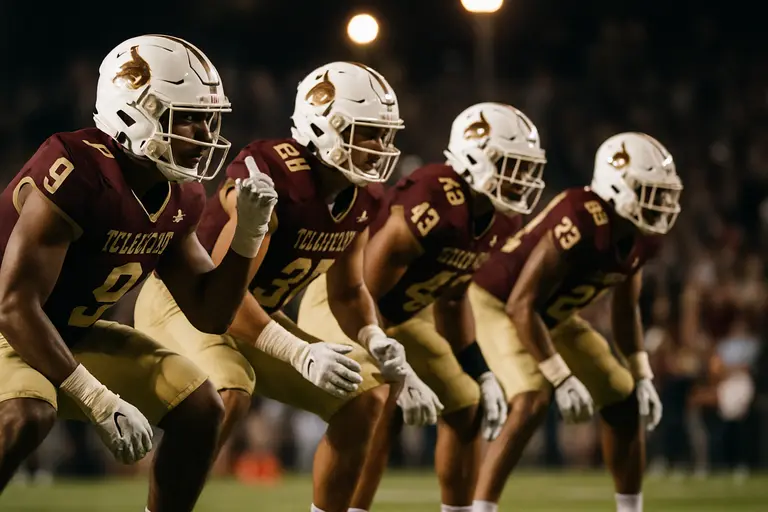
Every strong player profile needs a game that becomes shorthand. Payne has one. Texas State announced that he set a school record with 24 tackles against Marshall, finishing one tackle shy of the Sun Belt Conference record, and he was named Sun Belt Conference Defensive Player of the Week after that performance Texas State announcement. That is the type of box-score line that reaches beyond a coaching staff meeting and starts circulating among alumni, families and fans who follow the program week by week.
The Marshall Game As A Defining Marker
A 24-tackle game is not only a personal achievement. It tells a story about stamina and presence. Tackles can be split across assisted plays, open-field stops, pursuit angles and short-yardage collisions, but the total still demands repeated involvement. Payne had to keep finding the ball, keep arriving, and keep finishing enough plays for the number to climb into Texas State history.
For Bobcats supporters, that matters because defensive recognition can be harder to spread than offensive highlights. A running back’s long touchdown or a quarterback’s deep throw is easy to remember. A linebacker’s best work often stacks quietly until the stat sheet reveals how much ground he covered. Payne’s Marshall game gave the community a number that matched the eye test: he was everywhere.
Why Awards Matter In A Team Setting
Weekly conference recognition is an individual honor, but it reflects a team ecosystem. Defensive Player of the Week awards usually come from a combination of scheme, teammates doing their jobs and one player finishing at a high level. Payne’s honor gave Texas State another proof point that the program could produce defenders who command attention across the Sun Belt.
That kind of recognition helps inside the locker room, too. Younger players see that a defender can earn notice through preparation and repeated contact, not only through headline plays. For a program rooted in local attendance, player families and San Marcos pride, those examples matter. They turn development into something visible.
What Treylin Payne Means For Texas State Football
Treylin Payne gives Texas State a player-profile story with a local base, a record-setting peak and a practical pro-day angle. The Bobcats do not need to oversell that story for it to matter. The verified pieces are strong enough: a San Antonio background, a college path that included Houston before San Marcos, a school-record tackle performance, and a position profile that includes more than one defensive role.
A Local Player With A Wider Football Case
The reason Payne’s profile resonates is simple. He represents the kind of athlete Texas State can point to when talking about development, opportunity and fit. He was not just a name on a roster. He became a central tackler, earned conference recognition and gave fans a defensive performance that will stay in the program record book.
For families in San Antonio and students in San Marcos, that connection has value. It shows how a player from the region can build a college résumé that reaches pro-day conversations without losing the local thread. Payne’s next football step will depend on evaluations beyond Texas State, but his college story already belongs to the Bobcats community. It is a reminder that player achievement is never isolated here. It runs through high school fields, campus Saturdays, family sections in the stands and the teammates who help turn one defender’s production into a shared point of pride.