


While everyone focuses on quarterbacks and touchdowns, the real game-changers are often unseen. They wear the most anonymous jerseys. These are the players of the kicking game, where games can be won or lost.
Today, we’re exploring the world of specialists, return artists, and coverage savages. From kickers with nerves of steel to gunners who see the sideline as their hunting ground. These players work in football’s most chaotic yet beautiful space.
We’ll look at current depth charts and injury reports. We’ll see which teams have their special teams roster in order and which are taking risks. Remember, a bad special teams performance can ruin your Sunday. This is why having a reliable 53-player roster is key.
This isn’t just about listing positions. It’s about how games are won in the margins. Let’s explore the organized chaos of special teams.
Fresh Faces vs Veterans
The NFL’s kicking scene is like a battle between old-timers and newcomers. Seasoned kickers, who remember the Clinton era, face off against young guns. This battle is more thrilling than a reality TV show finale.
Let’s look at the kicker depth chart showdown. On one side, you have Matt Prater, who’s been kicking 50-yarders for years. Nick Folk and Brandon McManus are also veterans with a lot of experience.
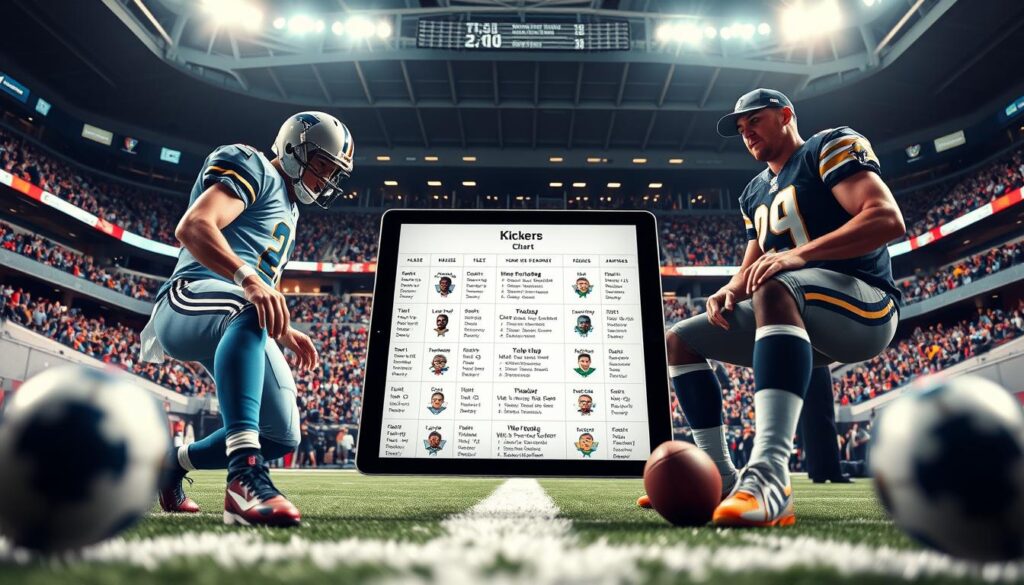
On the other side, there are rookies like Andre Szmyt, Will Reichard, and Harrison Mevis. They have college success but no NFL experience. It’s a test of who can handle the pressure.
Injuries add to the drama. Tyler Bass’s health worries Buffalo fans. Jason Sanders’s status in Miami is uncertain. Graham Gano’s situation with the Giants shows how quickly things can change.
Teams must decide between experience and youth. Veterans have proven skills but may not be as strong. Rookies have fresh legs but untested nerves. It’s like choosing between a reliable truck and a new sports car.
| Veteran Kickers | Experience | Career FG% | 2024 Team |
|---|---|---|---|
| Matt Prater | 16 seasons | 83.2% | Arizona Cardinals |
| Nick Folk | 15 seasons | 82.9% | Tennessee Titans |
| Brandon McManus | 10 seasons | 81.7% | Washington Commanders |
| Rookie Kickers | College FG% | Longest FG | 2024 Team |
| Andre Szmyt | 84.1% | 57 yards | Chicago Bears |
| Will Reichard | 84.0% | 55 yards | Minnesota Vikings |
| Harrison Mevis | 79.8% | 62 yards | Kansas City Chiefs |
This kicker depth chart analysis is fascinating. It’s not just about the numbers. It’s about the mental test teams face. Veterans have survived the NFL’s pressure. Rookies face a different challenge.
Injuries can change everything. When a veteran like Gano gets hurt, teams scramble. It’s like hiring a last-minute brain surgeon.
This year’s kicker depth chart decisions show team philosophies. Some value experience, others youth. There’s no perfect choice. Every team hopes their pick doesn’t fail them.
The beauty of this showdown is its unpredictability. A rookie could become a legend. A veteran might surprise everyone. In the end, every team hopes their choice doesn’t lead to watching playoffs from home.
Position Flexibility
Ever watch an NFL game and wonder why your favorite wide receiver suddenly looks like he’s auditioning for a track team? Welcome to the beautiful chaos of modern roster construction. Players are not just specialists but Swiss Army knives with cleats.
The NFL’s practice squad elevation rules have turned special teams into a fascinating chess match. Teams can now promote players from the practice squad up to three times before having to sign them to the active roster. This creates incredible position flexibility that would make MacGyver proud.
Let’s break down the return game. Kick returners and punt returners aren’t just speed demons anymore. They’re often your third-string receivers, backup corners, or even emergency quarterbacks. These athletes might field a punt in the first quarter, cover a kick in the third, and potentially take a wildcat snap if things get really desperate.
Why does this matter? Because every roster spot is precious gold in the NFL. Teams would prefer a player who can contribute in multiple phases than a one-trick pony. It’s the difference between carrying a full toolkit versus just a hammer.
The real magic happens with returner updates throughout the season. A team might start with a dedicated return specialist, but injuries or performance issues can force changes. Suddenly, your starting slot receiver is back there fielding punts – because sometimes you need your best hands on the ball, regardless of their primary job description.
This flexibility impacts game strategy in fascinating ways. Coaches must weigh the risk-reward of using key players on special teams. Do you really want your star corner returning kicks? Probably not. But sometimes the talent gap forces your hand.
Current NFL rosters show this trend clearly. Teams are prioritizing athletes who can contribute across multiple phases. It’s not enough to just be fast anymore – you need to be smart, versatile, and durable enough to handle the punishment.
The best part? This constant roster juggling creates compelling storylines throughout the season. That undrafted rookie returning kicks today might be your starting nickelback by Thanksgiving. In the NFL, position flexibility isn’t just a luxury – it’s survival.
Practice Reports & Stat Highlights
While everyone focuses on quarterback ratings, I look at hang time percentages and touchback rates. These show which special teams units are precise versus those that are chaotic. The magic happens when practice squad work pays off on game day.
Justin Tucker’s perfect week or Harrison Butker’s game-winning kicks aren’t random. They come from detailed practice reports and stats that guide every special teams roster breakdown. Coaches who get these numbers build teams that excel in fake punts and coffin corner kicks.
Missed chances often start with poor practice squad prep. When a kicker misses a 35-yard attempt or a return specialist fumbles in key moments, it’s a sign of bad practice habits. Top special teams coordinators use data to make tough roster choices.
This detailed approach to special teams roster breakdown sets apart the strategic geniuses from those just hoping for the best. In the NFL, where margins are thin, these details can mean the difference between winning and losing more than any offense.