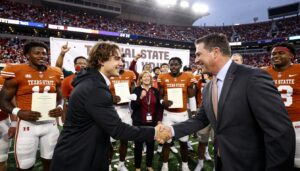
The Houston Texans did more than distribute every available ticket for their eight open 2026 training camp practices. They sold out the full public schedule in less than two hours, turning access to summer workouts at the Houston Methodist Training Center into one of the clearest measures of how dramatically expectations around the franchise have changed.
Houston opened training camp on July 29 as it prepared for its 25th NFL season. The public schedule began August 1 and includes practices on August 3, 4, 5, 7, 8, 10 and 18. Seven sessions begin at 9 a.m. Central time, with an evening practice scheduled for August 8. The final open date is a joint practice with the Las Vegas Raiders.
Those are free practice tickets rather than seats for a regular-season game, yet the demand still overwhelmed the available supply. Fans were not simply looking for inexpensive summer entertainment. They wanted an early view of a team that finished 12-5 in 2025, produced a franchise-record 10-game winning streak and earned its first road playoff victory.
Houston is no longer selling a distant plan built around draft picks and patience. The Texans are selling the possibility of a championship-level season, and the city is responding as if every public practice provides a first look at something significant.
Two Hours Of Demand Reflects Three Years Of Progress
The speed of the sellout matters as much as the total number of practices. The Texans opened free ticket registration on July 9, and all eight sessions were claimed in under two hours. Team broadcaster Marc Vandermeer described the response as an indication of where the fan base stands heading into camp.
That enthusiasm has been built through results. Houston drafted C.J. Stroud and Will Anderson Jr. with consecutive selections near the top of the 2023 NFL Draft, then placed both players under DeMeco Ryans, a former Texans linebacker who returned as head coach.
Stroud won the 2023 NFL Offensive Rookie of the Year award. Anderson earned Defensive Rookie of the Year honors. Houston reached the playoffs in each of Ryans’ first three seasons and raised its regular-season win total to 12 in 2025.
The franchise’s 25th-season timeline places the current period under “sustained success,” a description supported by the team’s late-season run. Houston recovered from a 3-5 start to win its final nine regular-season games, then defeated the Pittsburgh Steelers 30-6 in the wild-card round on January 12, 2026. That victory was the first road playoff win in franchise history.
The season ended with a 28-16 divisional-round loss to the New England Patriots at Gillette Stadium. That result kept Houston from reaching its first AFC Championship Game, but it did not erase the shift in the franchise’s competitive position.
Fans now approach training camp with questions about how far the Texans can advance rather than whether they can become relevant. That is a major change for a franchise whose first two decades included long rebuilding stretches, quarterback instability and only six playoff appearances before Ryans arrived.
Open Practice Tickets Have Become A Measure Of Belief
Training camp attendance is not a scientific forecast of regular-season success. Free admission, summer schedules and the limited size of the Houston Methodist Training Center all influence demand. The sellout still provides a useful reading of local confidence.
Fans began arriving hours before the first open practice on August 1, with some reaching the facility during the early morning to secure favorable general-admission seating. Every distributed ticket had already been claimed, and the remaining competition was over where attendees would sit and how close they could get to drills or post-practice autograph opportunities.
The Texans’ official training camp schedule gives supporters repeated access rather than concentrating interest into one weekend event. Six practices are scheduled within a 10-day period, followed by the August 18 joint session with Las Vegas.
That structure asks fans to attend weekday morning sessions in Houston’s August heat. Selling out every date indicates that the audience extends beyond a small group of dedicated camp regulars. Families, season-ticket members and general supporters are willing to organize work, transportation and morning schedules around a practice.
Houston has experienced strong football support for decades, including the Oilers era and the Texans’ earliest seasons. Current demand feels different because it is attached to a roster entering camp with established stars, recent playoff success and a narrower margin between contention and disappointment.
An open practice now carries the appeal of evaluation. Fans are watching Stroud’s development, Tank Dell’s return, the rebuilt offensive line, the running back rotation and the depth behind one of the NFL’s strongest defensive groups. Camp offers an early answer to questions that could shape January football.
The Standard Has Moved Beyond Winning The AFC South
Houston’s expectations once centered on becoming stable enough to compete for a division title. That objective no longer defines success.
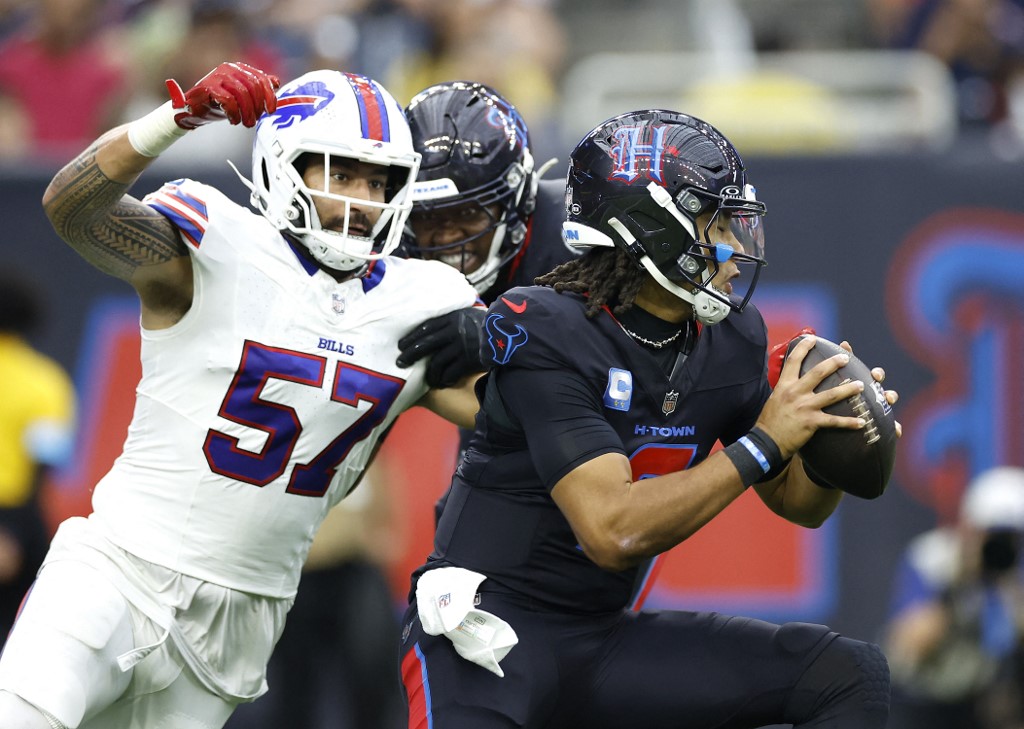
The Texans have reached the postseason three times under Ryans. They have won playoff games and developed a defense capable of controlling strong opponents. Their 2025 team allowed 17.4 points and 277.2 yards per game, placing the unit among the NFL’s best. Houston’s late-season winning streak showed that it could sustain success rather than rely on a brief run.
The divisional-round loss exposed the next barrier. Stroud completed 20 of 47 passes for 212 yards, one touchdown and four interceptions against New England. One interception was returned for a touchdown, and Houston failed to score in the fourth quarter.
The official divisional-round box score explains why the 2026 camp conversation is focused so heavily on offensive execution. The Texans limited New England to 248 total yards but still lost by 12 points after turnovers repeatedly damaged their chances.
Houston’s defense already looks capable of supporting a long playoff run. Will Anderson Jr., Danielle Hunter, Derek Stingley Jr., Kamari Lassiter, Jalen Pitre and Calen Bullock give Ryans established talent at every level. The question is whether the offense can become steady enough to complement that group.
That changes what fans seek from training camp. There is less interest in broad optimism and more attention on protection calls, timing, run-game efficiency and Stroud’s decision-making. Supporters understand that the difference between another divisional-round exit and a deeper run may come from a handful of offensive possessions.
Selling out practice does not lower that standard. It raises it by demonstrating how invested Houston has become in the outcome.
C.J. Stroud Remains At The Center Of The 2026 Season
Stroud enters his fourth NFL season with a résumé that many young quarterbacks would welcome. He has won a major individual award, started multiple playoff victories and helped change the Texans’ identity.
His position in 2026 is still more complicated than it appeared after his rookie season. Production declined as Houston struggled with pass protection, offensive continuity and explosive consistency. His four-interception performance at New England placed a difficult ending on a 12-win season.
General manager Nick Caserio said in late July that the Texans and Stroud’s representatives had held positive discussions about a contract extension. Houston exercised the quarterback’s fifth-year option, keeping him under team control through 2027, yet a long-term agreement would carry financial and organizational significance.
That backdrop makes every open practice rep more interesting. Fans are watching how Stroud handles the pocket behind another reworked offensive line, how quickly he moves through progressions and whether his timing with Nico Collins, Jayden Higgins, Tank Dell and Dalton Schultz looks cleaner.
The NFL’s AFC South camp preview identified offensive-line performance and Stroud’s response as Houston’s two primary storylines. The Texans added veterans Wyatt Teller and Braden Smith, retained Ed Ingram and used a first-round selection on interior lineman Keylan Rutledge.
The ticket demand means thousands of Houston fans will evaluate that work themselves. They are not waiting for preseason summaries or television analysis. They want to see whether the offense appears more confident, organized and physically equipped than the group that struggled during key parts of 2025.
The Defense Has Made Championship Expectations Reasonable
Houston’s rising expectations are not based only on Stroud’s potential. The defense gives the franchise a dependable competitive floor.
Ryans has built the unit around speed, pressure, coverage flexibility and aggressive tackling. Anderson and Hunter can disrupt the pocket from opposite sides. Stingley gives Houston a high-level coverage defender. Lassiter’s development makes it more difficult for offenses to avoid Stingley by attacking the other boundary.
Bullock and Pitre add range and versatility behind the front. Linebacker Azeez Al-Shaair supplies experience and leadership through the middle. The result is a defense capable of keeping Houston in games when the offense is uneven.
That strength affects how supporters view camp. A team with a developing defense might sell hope around future growth. Houston can point to recent production and ask whether the offense can catch up quickly enough to create a complete contender.
The first public practice reinforced that attention. Hunter generated pressure, young defensive backs produced interceptions and the unit challenged Stroud before the offense responded later in the session. Ryans cautioned that meaningful evaluations would increase when players moved into full pads, yet the competitive balance already reflected the season’s central issue.
Houston does not need to discover whether it has defensive talent. It needs to preserve that strength, build depth and avoid wasting it through offensive inconsistency.
The Raiders Practice Adds A Competitive Edge
The August 18 joint practice with Las Vegas is the most valuable public session on the schedule. Intrasquad work can become familiar after several weeks. Facing another roster introduces different formations, techniques and matchup problems without waiting for a preseason game.
The Raiders session gives Houston’s offensive line a stronger test against unfamiliar pass rushers. Stroud will have to process different coverage disguises. The Texans’ defense will work against another quarterback room, receiving group and protection system.
For fans, that session offers more than access to routine drills. It provides a controlled comparison between Houston and another NFL team at a point when roster battles and starting combinations are taking shape.
The Texans will later travel to Charlotte for a joint practice with the Carolina Panthers before their August 28 preseason meeting. That road session will not provide the same local access, making the Raiders date the clearest opportunity for Houston supporters to observe opponent-based work before the regular season.
The team’s training camp visitor guide describes the open sessions as a free, close-range look at preparations, with parking in the Green Lot for ticketed fans and mobile access through the Texans app. The practical planning around entry, parking and seating reflects the scale of demand surrounding what was once a routine summer activity.
Houston’s 25th Season Arrives With A Different Kind Of Pressure
The Texans are using their 25th season to recognize the people and moments that shaped the franchise. The timing gives the celebration a competitive dimension.
Houston is not honoring its history during a reset. It is entering the anniversary year with a 12-win roster, a head coach who played for the franchise, a former Offensive Rookie of the Year at quarterback and a defense built to contend now.
That combination changes the emotional meaning of sold-out practices. Fans are celebrating the franchise’s past while expecting the current team to produce something Houston has never achieved: an AFC Championship Game appearance or a trip to the Super Bowl.
The eight practice sellouts do not prove that the Texans will reach either stage. They show that the audience considers those objectives realistic enough to invest attention before a preseason snap has been played.
Houston’s football calendar once began with cautious questions about whether a new coach, quarterback or rebuild could establish stability. The 2026 calendar begins with a different concern: whether a talented roster can convert its strongest position in franchise history into a longer postseason run.
That is why the ticket response matters. Under Ryans, training camp has shifted from an introduction to a test. Fans already know the principal players and the team’s identity. They are attending to judge progress.
The Texans have earned that belief through three playoff seasons, a 12-5 record and the franchise’s first road postseason win. They have inherited the pressure that comes with it. Every sold-out morning at the Houston Methodist Training Center is evidence that Houston now expects more than competitive football.