College football has an 85-scholarship limit, creating a fascinating economic gap. Power 5 programs show off their five-star recruits. But the real drama happens in the shadows.
Here, afterthoughts become legends. Athletes like Baker Mayfield went from a Texas Tech walk-on to a Heisman winner. J.J. Watt, too, left a MAC scholarship to become an NFL star.
And then there’s Hunter Renfrow, who caught championship-winning touchdowns despite being 5’10” and 155 pounds. These stories are more than just football tales. They’re a commentary on social class, hidden in sports drama.
These stories are like rejected Hollywood scripts that became real. They show the determination in programs across the nation, including Texas State Sports.
Journey to the Roster
Ever wonder what it’s like to navigate college football’s version of Kafka meets Horatio Alger? The walk-on path isn’t a straight line—it’s more like a Rube Goldberg machine designed by athletic directors with a dark sense of humor.
Take Clay Matthews at USC. His dad was an NFL legend, but young Clay spent his days running scout team drills. Pete Carroll’s machine rolled toward national championships while Clay was in the shadow of the Coliseum.
Then there’s J.J. Watt’s audacious move. He ditched a Central Michigan scholarship to walk on at Wisconsin. It was like betting on himself in the highest-stakes game of musical chairs. The man didn’t just change schools—he reinvented his entire position.
These non-scholarship athletes face a unique calculus: endless grunt work with no guarantee of payoff. They’re the human equivalent of venture capital investments—high risk, potentially massive returns.
Colt Brennan’s story reads like a football odyssey. From Colorado to community college to Hawaii, his dual walk-on journey was less about finding a team and more about finding himself. The transfer portal before it was cool.
Stetson Bennett’s junior college detour proves sometimes the scenic route gets you there faster. While five-stars were getting coddled, Bennett was getting better—the ultimate revenge of the undervalued.
The development path for these players isn’t linear. It’s a series of calculated gambles and position changes that would make a chess grandmaster sweat. Redshirt seasons become transformation periods, practice fodder becomes film study gold.
What separates the successful non-scholarship athletes from the rest? It’s that moment when coaches stop seeing you as emergency depth and start seeing actual football players. The same relentless work ethic that Jody Fortson demonstrated in his professional journey.
These aren’t feel-good stories—they’re case studies in organizational psychology. How do you identify talent that doesn’t come with a five-star price tag? How do you cultivate diamonds that everyone else walked past?
The roster spot earned through sheer force of will might be college football’s purest meritocracy. No recruiting stars, no hype—just production and persistence meeting opportunity.
Practice Standouts
Ever wonder what makes some practice players stand out? It’s their skill at being someone else. They’re too good at their roles.
Clay Matthews was so good in special teams drills, USC created awards for him. Jim Leonhard intercepted so many passes, Wisconsin’s coaches had to play him. These unsung heroes catch everyone’s eye while acting like opponents.
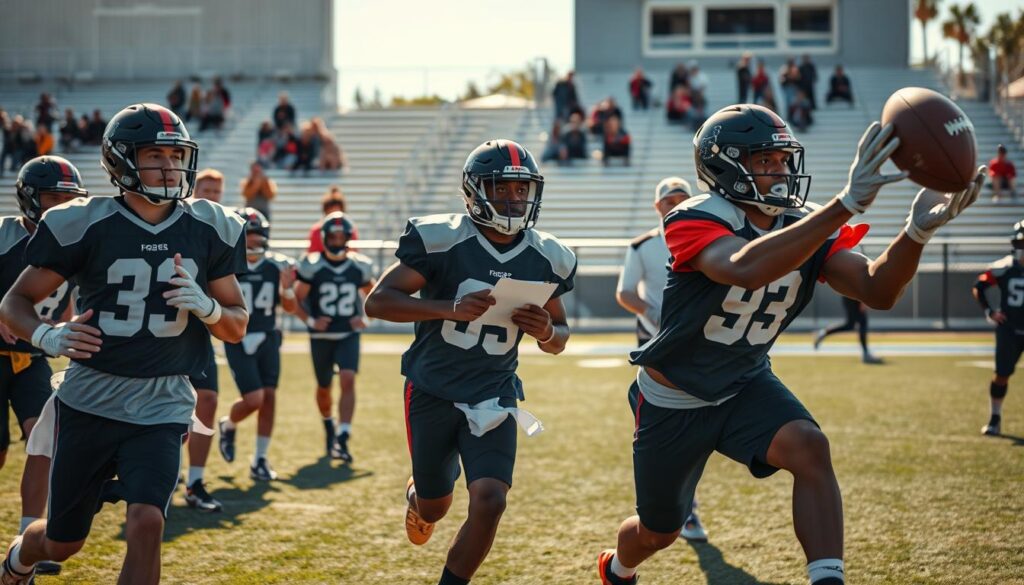
Being great on the scout team is like a Trojan horse. You play Clemson’s offense one minute and outplay everyone the next. It’s like acting with shoulder pads, where you become the role so much that your real talent shines.
Turning from a walk-on to a defensive star is not easy. It takes incredible practice to make coaches rethink their strategies. Just look at Boen Phelps, who went from scout team to scholarship player through his dominance.
Special teams are where players prove themselves. Third-down drills are like auditions. Every practice is a chance to show you’re ready for the game, even if you’re not officially on the team yet. These practice unsung heroes know the secret: sometimes the best way to get noticed is by doing the toughest job.
Game-Day Opportunities
When the stadium lights shine bright, scholarship players might falter, but walk-ons shine. This isn’t chance – it’s a pattern of excellence under pressure.
Take Hunter Renfrow’s game-winning catch with just one second left. It was more than football; it was a moment of perfect timing. A walk-on, he became Clemson’s key player when others couldn’t get open.

Stetson Bennett was told he was too small for SEC football. Yet, he threw four touchdown passes in a 65-7 win. It was a way of saying, “I’m more than you think” with a national championship trophy.
Walk-ons like Baker Mayfield and Matt McGloin show how preparation meets opportunity. Mayfield’s record-breaking starts at Texas Tech, while McGloin became Penn State’s starter during their ban years.
Rodrigo Blankenship’s Rose Bowl heroics are a prime example of a walk-on’s journey. Starting as a non-scholarship player, he became Georgia’s go-to kicker in big games.
What makes these moments special? Walk-ons often shine in high-pressure games. They’ve been proving doubters wrong their whole careers, and championships are just the final test.
This isn’t just about football. Service academy athletes also show the walk-on spirit, balancing military and sports.
The best walk-on stories show that being overlooked builds resilience. These players aren’t intimidated by pressure; they thrive on it.
Coaches are starting to see this too. Walk-ons often have the mental strength that recruited players might not. Championship moments just show what was already there.
Coach & Player Testimonials
Baker Mayfield’s “bet on myself” attitude became a mantra for walk-ons. He went from being overlooked to winning the Heisman. This shows that some of the best talent comes without much fanfare.
J.J. Watt’s comments about Wisconsin pride show a big change. He went from being overlooked to becoming a symbol of the program. Coaches find walk-ons like they’re discovering new worlds. These players often have a drive that can’t be measured.
Hunter Renfrow and Stetson Bennett’s stories highlight the importance of unsung heroes. They practice as if every rep is their last. Coaches often prefer these players over those who expect special treatment.
These stories create lasting myths in college sports. Walk-ons develop mental toughness that scholarship players might not have. Their journeys are similar to the success stories at Coachability, where development is more important than pedigree.
The real secret in recruiting might not be about star ratings. It’s about finding those who have something to prove. The walk-on mentality is about changing what value means in college sports.