


The Dallas Wings entered the 2026 WNBA All-Star break looking like one of the league’s fastest-rising teams. They had won seven of eight, Paige Bueckers was driving an efficient offense, Jessica Shepard had become one of the league’s most productive rebounders, and Dallas had climbed firmly into the playoff picture. Since play resumed, the picture has changed.
Dallas enters its August 12 home game against the Toronto Tempo at 19-14 after losing five of six games following the break. The slide has included a one-point loss to Atlanta, two defeats against Washington, a 94-76 home loss to Golden State and a 103-90 defeat at Minnesota. The Wings have fallen to eighth in the playoff order entering Wednesday’s action.
Several issues have contributed: Azzi Fudd has dealt with right knee soreness, late-game execution has slipped and Minnesota just made 10 three-pointers through Kayla McBride alone. Yet the warning that should concern Jose Fernandez most is what happens when Dallas faces a bigger, more physical frontcourt and cannot finish defensive possessions with rebounds.
The Wings are not a bad rebounding team by season-long numbers. That makes the recent warning more significant, not less. Their best basketball depends heavily on Shepard controlling the glass. When opponents remove that advantage — or when Shepard is unavailable — Dallas becomes easier to attack.
Washington Exposed The Problem In One Number
The clearest example came July 31 at CareFirst Arena.
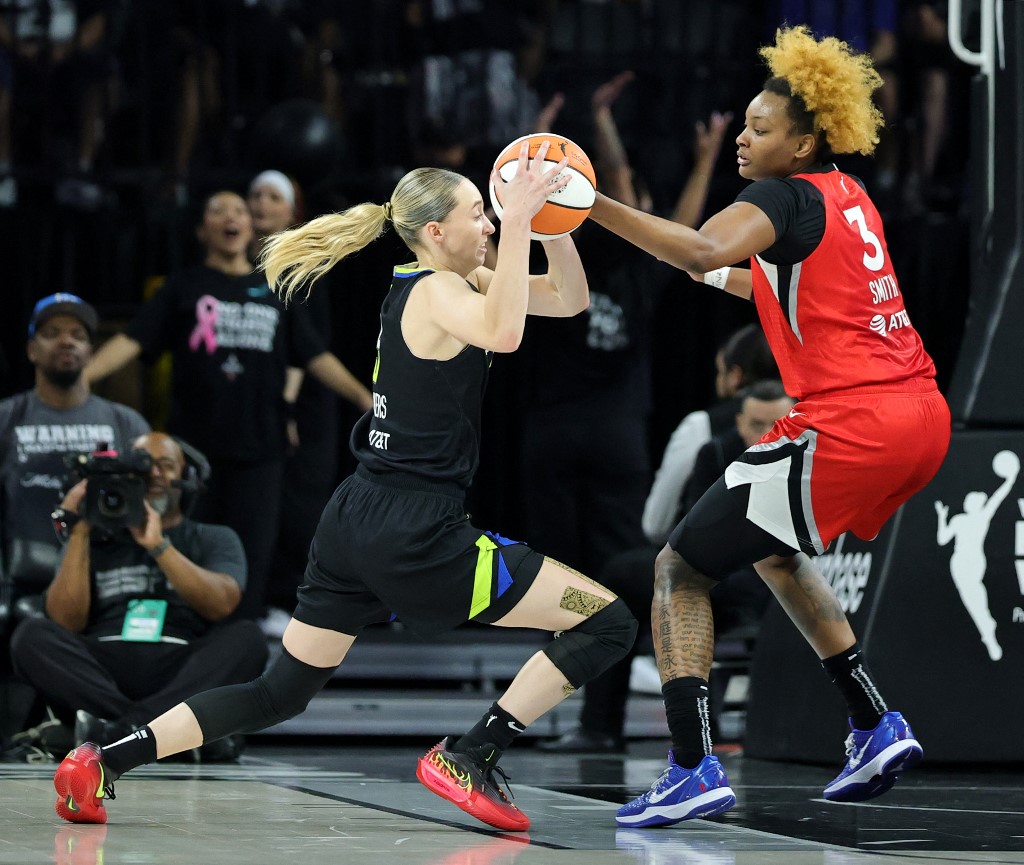
Washington beat Dallas 81-75 and outrebounded the Wings 55-38, a 17-rebound difference that repeatedly gave the Mystics extra possessions. Shakira Austin scored a season-high 28 points, Kiki Iriafen added 22, and the two Washington frontcourt players combined for 50 points and 19 rebounds. Dallas briefly took the lead during the fourth quarter but could not consistently close possessions after forcing misses.
That game should matter more than a normal six-point loss.
The Wings had enough guard production to remain competitive. Bueckers scored 23 points, Arike Ogunbowale added 20 and Fudd made two three-pointers. Washington still controlled the game through size, interior positioning and repeated work on the offensive boards.
Four late Washington opportunities on one possession captured the problem. Dallas defended the initial action well enough to survive, then kept giving the Mystics another chance.
That is why rebounding cannot be treated as a box-score category separate from defense.
A defensive possession is incomplete until the ball is secured. Dallas can force a difficult Austin shot or push Iriafen away from her preferred spot, but the work loses much of its value if Washington recovers the miss and attacks a scrambled defense.
The July 31 Wings-Mystics matchup became the strongest post-break warning that Dallas can be physically displaced even when its guards produce enough offense to win.
The Warning Is About Matchups, Not The Season Average
Dallas’ season-long rebounding numbers make the situation more nuanced.
Before the recent slide intensified, the Wings were averaging roughly 34 rebounds per game, essentially even with their opponents. Jessica Shepard was one of the main reasons. Through the first 26 games, she was averaging 11.8 rebounds, including 3.3 offensive rebounds per game.
Shepard had already produced several huge rebounding performances. She collected 16 rebounds in Dallas’ May 18 victory over Washington and reached 19 double-doubles by the first game after the All-Star break.
Dallas can rebound effectively when Shepard establishes position and the perimeter players participate.
The issue appears when opponents have enough frontcourt size to make Shepard battle two jobs at once.
Washington could use Austin and Iriafen together. Minnesota can attack with Napheesa Collier and Natasha Howard around an active perimeter group. Golden State uses a deep rotation that can maintain physical pressure without relying on one interior player.
Against those teams, Dallas cannot ask Shepard to box out the strongest opposing rebounder and then expect her to collect every loose ball herself.
Bueckers, Ogunbowale, Fudd, Aziaha James and the Wings’ wings have to rebound down from the perimeter. Alanna Smith must supply consistent help. Awak Kuier and Li Yueru need to convert size into possessions when their minutes arrive.
Rebounding against playoff-caliber teams has to become a five-player responsibility.
Jessica Shepard’s Ankle Makes The Timing Worse
The concern grew on August 9 in Minneapolis.
Shepard injured her ankle during the first quarter against Minnesota and did not return. Dallas went on to lose 103-90 as McBride scored a career-high 43 points and became the first player in WNBA history to make 10 three-pointers in a game. Bueckers led the Wings with 23 points and eight assists.
The spectacular perimeter shooting received most of the attention, understandably. Shepard leaving early may carry more relevance for Dallas’ next several games.
She was held out of Tuesday’s practice and limited to work on an exercise bike. As of Wednesday morning, Dallas had not yet issued the final availability determination for the Toronto game. Fudd, who missed two games with right knee soreness, participated fully in practice and appeared closer to returning.
Losing Fudd affects spacing and shooting.
Losing Shepard changes the physical structure of the team.
Shepard provides scoring, passing and one of the best rebounding rates on the roster. She allows Dallas to finish possessions without sending every guard toward the rim. Her offensive rebounding generates second chances without destroying transition balance.
The Wings can replace portions of her scoring. Replacing nearly 12 rebounds per game is much harder.
That makes Shepard’s status one of the most significant developments surrounding tonight’s game against Toronto.
Alanna Smith Now Has A Larger Frontcourt Responsibility
Dallas made a major investment in its frontcourt before the season by adding reigning WNBA Defensive Player of the Year Alanna Smith.
Smith’s value extends beyond traditional rebounding totals. She can protect the rim, switch defensively, contest shots and play away from the basket offensively. Those traits give Fernandez flexibility that Dallas lacked during its difficult 2025 season.
The post-break stretch has started asking for something else: more possession control.
Smith produced one of her strongest Dallas performances in the August 5 rematch against Washington, finishing with 21 points and 11 rebounds. Shepard and Smith combined for 43 points and 22 rebounds. Dallas still lost 96-92 after blowing a 20-point advantage and being outscored heavily after halftime.
That game showed why the Wings’ problems cannot be reduced to one statistic.
Dallas can rebound better and still lose through transition defense, late-game decisions or perimeter coverage. Rebounding remains the part that gives those other problems greater weight.
An opponent that receives another possession can attack before Dallas resets. A second-chance opportunity can create an open three after the original defense forced a contested interior attempt. Offensive rebounds can turn a successful 20-second defensive possession into another full shot clock.
Smith has the length and defensive instincts to help close those possessions.
If Shepard misses time, Smith may have to operate more frequently as the primary rebounder rather than the secondary defensive playmaker.
Golden State Showed What A Deeper Team Can Do
Dallas’ August 7 game at American Airlines Center supplied another uncomfortable test.
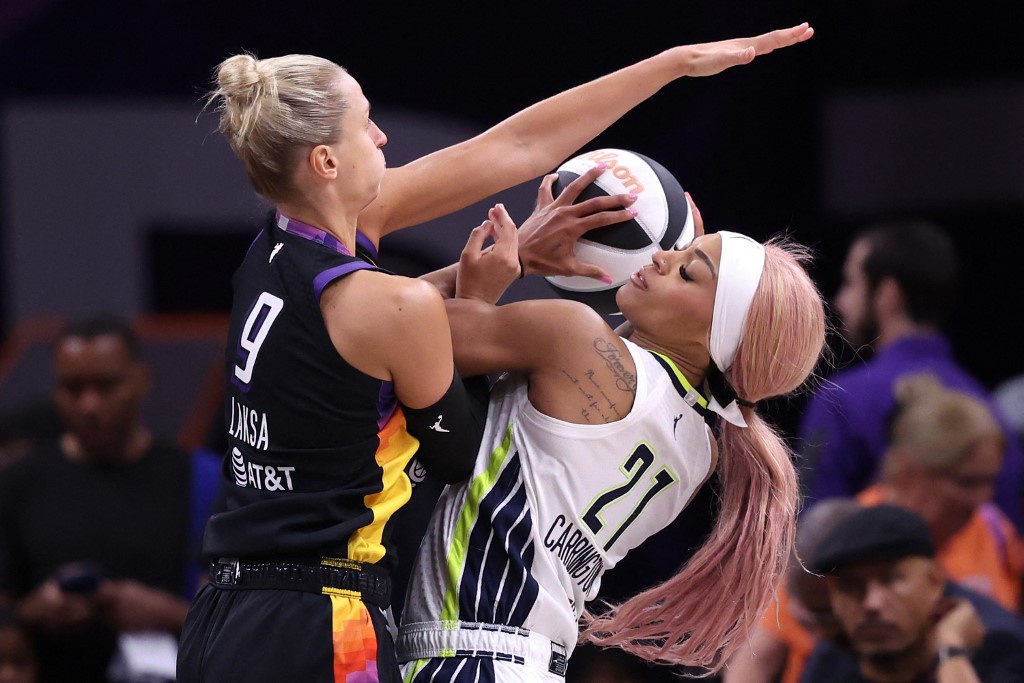
Golden State won 94-76 in front of 16,444 fans. Veronica Burton scored 22 points with seven assists, and the Valkyries controlled the boards while holding Dallas to only five made field goals in each of the first three quarters. The Wings committed 13 turnovers and never found enough offensive rhythm to force Golden State away from its preferred style.
Fudd did not play because of knee soreness, but the loss went beyond one missing shooter.
Golden State demonstrated the value of depth.
The Valkyries could defend, rebound and rotate players without allowing Dallas to create obvious matchup targets. Their physical control supported their perimeter defense rather than functioning as a separate part of it.
That represents the type of playoff basketball Dallas should expect.
The Wings can beat teams through Bueckers’ shot creation, Ogunbowale’s scoring runs and Fudd’s shooting. The postseason will eventually ask them to survive possessions where none of those advantages produces an immediate basket.
Those games become about loose balls, defensive rebounds and preventing two shots from becoming three.
Dallas Has Already Shown What The Better Version Looks Like
The post-break stretch has not been entirely negative.
Dallas beat Connecticut 83-63 on August 2, its only win in the six games since the break. Shepard and Ogunbowale each scored 15 points, Fudd hit four of five three-pointers, and the Wings used a 24-8 third-quarter run to turn a competitive game into a comfortable victory.
That performance showed what Fernandez wants.
Dallas defended without constantly scrambling, moved the ball, received balanced production and created enough control to rest key players during the fourth quarter.
The Wings do not need to become the league’s highest-volume offensive rebounding team. Chasing every missed shot can expose a team in transition, especially when playing opponents with dangerous guards.
They need consistency on the defensive glass.
Before the post-break skid, Dallas’ ability to rebound had actually been viewed as one of its strengths. A July assessment of title contenders identified the Wings among the league’s best defensive rebounding teams, with their offensive rebounding closer to average.
That is what makes the Washington game so useful diagnostically.
The 55-38 disadvantage was not normal Dallas basketball. It showed what can happen when a physical opponent successfully attacks the area that usually helps stabilize the Wings.
The Schedule Will Keep Testing Dallas
Dallas does not have much time to correct the slide.
The Wings host Toronto at College Park Center on August 12 at 7 p.m. Central, then travel to Indiana on August 14 and Golden State on August 17. The Fever visit American Airlines Center on August 20 before Seattle and Portland come to Arlington later in the month. The Wings’ 2026 schedule then pauses after the August 30 game against Connecticut for the FIBA Women’s Basketball World Cup.
That stretch creates different rebounding tests.
Toronto enters Wednesday on a nine-game losing streak, giving Dallas an opportunity to restore some control before facing stronger playoff competition. Golden State already showed what its depth can do. Seattle brings another frontcourt problem. Indiana adds its own pressure on the glass and in transition.
The Wings cannot afford to treat the remaining August games as a long experiment.
At 19-14, Dallas remains in playoff position, but the team has lost enough ground that seeding matters again. A young roster with limited postseason experience would benefit from avoiding the lowest seeds and the most difficult opening matchup possible.
That requires turning close defensive possessions into stops.
Why The Glass Could Decide Dallas’ Playoff Ceiling
The Wings’ post-All-Star warning is not that they suddenly forgot how to rebound.
It is that the teams Dallas may need to beat in September have shown a repeatable way to attack them.
Washington used Austin and Iriafen to overwhelm Dallas physically. Golden State controlled the boards as part of a complete defensive performance. Minnesota presented another elite frontcourt challenge before Shepard’s ankle injury removed Dallas’ best rebounder in the opening quarter.
The Wings still have the offensive talent to recover.
Bueckers can organize the offense and create efficient scoring chances. Ogunbowale remains capable of changing a quarter quickly. Fudd’s expected return would restore another high-value perimeter shooter. Smith gives Dallas defensive versatility.
The question is whether those possessions end after one opponent shot.
Dallas was built to improve dramatically in 2026, and a 19-14 record after winning only 10 games last season is evidence that the rebuild has moved much faster than expected. The playoff standard creates a different test.
The Wings do not need another scorer to explain their August problems. They need guards who rebound down, forwards who maintain position and enough frontcourt depth to survive physical matchups when Shepard cannot carry the entire load.
The 55-38 rebounding deficit in Washington was one night.
What Dallas does about it during the rest of August could determine whether it was merely a warning or a preview of the matchup that ends its season.