Texas State Baseball came away from its two 2026 meetings with No. 2 Texas without a win, but the split-site series still gave San Marcos a clear read on where the Bobcats stood against one of the strongest teams on their schedule. The first game was a 15-4 loss at Bobcat Ballpark on March 10. The second, played March 31 at UFCU Disch-Falk Field in Austin, tightened into a 10-8 defeat after Texas State led early and kept scoring across multiple innings. Those two results tell a useful story: the Bobcats had enough offense to pressure elite pitching at times, but their margin for error narrowed fast when pitching counts, free baserunners and defensive mistakes stacked up.
What Texas State Baseball Learned Against Texas
Texas State Baseball Faced Two Different Tests
The March 10 matchup in San Marcos was defined by how quickly Texas created stress. Texas State fell 15-4 to No. 2 Texas at Bobcat Ballpark, and the Bobcats were 12-4 after the result, according to Texas State Athletics. That score line points to a night where the home team had to chase the game almost immediately, which changes every coaching choice that follows: bullpen timing, pinch-hit planning, defensive substitutions and whether to protect arms for the next stretch of the schedule.
The March 31 rematch in Austin carried a different tone. Texas State lost 10-8, but the Bobcats led 3-2 after the first inning and scored in multiple innings. For a coaching staff, that matters. A one-sided loss can expose weak points, but a closer road defeat can show which parts of the lineup travel and which players are ready to compete against high-end opponents in louder, less forgiving settings.
The San Marcos Crowd Raised The Stakes
The first meeting also had a community layer that should not get lost in the score. The March 10 game drew a record crowd of 3,482 spectators at Bobcat Ballpark, per Texas State Athletics in the same official recap. That number matters because baseball development at a college program is not only about who wins a midweek game. It is about whether players are getting meaningful pressure reps in front of a home crowd that treats the matchup like a local event.
For San Marcos, a packed Bobcat Ballpark against Texas gave the program a visible reminder of what high-interest baseball can look like on campus. Families, students and local alumni had a reason to circle the date. The Bobcats did not reward that crowd with a win, but the setting still gave younger players and role players a taste of a postseason-type environment in March.
Early Pitching Stress Shaped The First Meeting
Titan Targac’s Short Start Forced A Quick Pivot
The clearest strategic issue from the March 10 loss was the early pitching strain. Starting pitcher Titan Targac was pulled after recording only two outs, having allowed two runs on two hits and two walks, according to the official Texas State recap. That is the kind of start that can strain a staff beyond one inning. It forces the bullpen into traffic before the game has settled and asks relievers to cover outs earlier than planned.
From a depth chart view, that kind of outing can become a staff-wide evaluation point. Coaches are not only judging the starter who leaves early. They are also learning which middle relievers can enter with inherited pressure, who can limit damage without a clean inning, and which arms might be trusted later in conference play. Against a lineup as dangerous as No. 2 Texas, small command misses can become crooked numbers fast.
That does not mean one short start defines a pitcher or a staff. It does show why midweek games against elite opponents carry scouting value. Texas State Baseball got a hard look at how its pitching plan responded when the starter did not reach the first full inning. That information can shape roles, especially if a staff is sorting out bridge innings between starters and late-game options.
Dawson Park Gave The Lineup A Needed Swing
The most direct offensive highlight from the San Marcos game came from Dawson Park, who hit a three-run home run and accounted for most of the Bobcats’ scoring, per the official recap. In a 15-4 loss, one swing does not change the outcome. It can still matter for lineup confidence and role clarity.
Power production against top-tier competition gives a staff evidence that a hitter’s approach can hold up when velocity, command and defensive athleticism rise. For Park, that swing gave Texas State a clean example of damage in a game where the Bobcats spent too much of the night playing from behind. For the lineup around him, it reinforced the need to create traffic before extra-base contact. A three-run homer is only possible because hitters before it reached base.
That is where player growth shows up in the box score and beyond it. The Bobcats did not need to match Texas swing for swing across nine innings to gain useful information. They needed to identify which hitters kept their plans, which at-bats lengthened innings and which spots in the order could produce against premium opposition.
The Austin Rematch Showed A Better Response
First-Inning Lead Changed The Feel
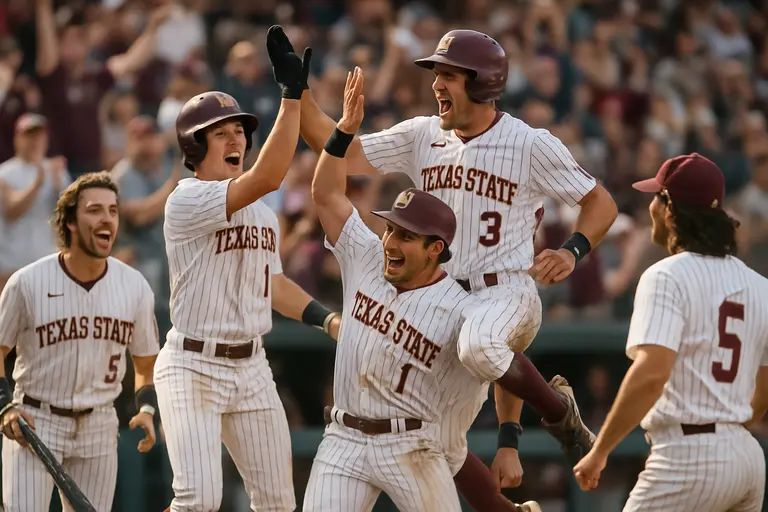
The March 31 game in Austin was not a repeat of the San Marcos loss. Texas State led 3-2 after the first inning and remained within reach in a 10-8 defeat. That early lead matters because it changed the pressure distribution. Instead of absorbing an early Texas surge and trying to recover from a wide gap, the Bobcats put the Longhorns in response mode right away.
For Texas State Baseball, that kind of start has value even in a loss. It showed that the lineup could arrive with intent on the road and create early scoring against a highly ranked opponent. Coaches can build from that because early offense supports the entire dugout. It allows hitters to see that the plan works, gives pitchers a lead to protect, and keeps bench players locked into late-game roles.
The rematch also showed resilience. The research notes show Texas State scored in multiple innings, which is a more encouraging offensive pattern than one isolated rally. Multiple scoring innings usually reflect steadier lineup pressure, better adjustment to pitching changes and a refusal to let one missed chance drain the rest of the night.
Errors Kept The Margin Thin
The defensive piece is harder to ignore. The Bobcats committed errors in both games, and those mistakes contributed to Texas scoring opportunities. Against a highly ranked opponent, that is often the difference between manageable innings and extended damage.
Defense is where roster development can be less flashy but just as decisive. A clean throw, a secured ground ball or an extra out saved can change bullpen usage and keep the batting order from pressing. When errors appear against Texas, they do not sit quietly in the scorebook. They affect pitch counts, force pitchers to work from the stretch, and give an opponent extra chances with runners aboard.
This is where the Longhorns matchups should help the Bobcats evaluate roles. If a player brings a strong bat but is still settling defensively, the staff has to weigh late-game substitutions. If a defender saves runs but offers less production at the plate, the batting order has to account for that tradeoff. Texas State’s two games against Texas put those decisions in sharper focus.
That same cross-sport theme has shown up elsewhere in San Marcos, where rotation trust and role growth can shape a season’s direction. Readers tracking that pattern across Bobcat athletics can see a similar team-building thread in Texas State basketball’s Sun Belt growth, where steadier roles became part of a stronger late stretch.
Why These Texas Games Matter For The Bobcats
Development Value From High-Level Pressure
Texas State Baseball did not solve Texas in 2026, but the two meetings gave the program practical evidence. The Bobcats saw what happens when a starter exits early, what a record home crowd feels like, how one big swing can keep a dugout engaged, and how a better road response can still fall short if defensive mistakes create extra pressure.
The record markers also matter. Texas State was 12-4 after the March 10 loss and 19-9 after the March 31 game, based on the research provided. That context keeps the Texas losses from defining the season by themselves. The Bobcats were still in a competitive position despite being swept in the two-game set by one of the nation’s top-ranked teams.
For the coaching staff, the useful takeaways are not vague. The pitching depth chart needed answers after the early San Marcos hook. The lineup showed it had punch through Park’s three-run homer and later showed more sustained road scoring in Austin. The defense gave the staff teaching points because errors in both games helped Texas create scoring chances.
For the San Marcos community, the record crowd at Bobcat Ballpark may be the lasting local image from the series. A 15-4 loss is not what anyone around the program wanted, but 3,482 spectators at a college baseball game sends a clear message about local interest. If Texas State can pair that support with cleaner execution, these high-profile matchups can do more than test the roster. They can strengthen the connection between the team and a fan base that is ready to show up for meaningful baseball.
The Bobcats left the Texas series with losses, but not without usable information. In team-building terms, that matters. High-level opponents reveal where a roster is stable, where the next player in the chain must be ready, and where development work has to show up before the next tight game arrives.