Welcome to the NBA’s witness protection program, where teams change often. Almost half the league got new players last season. Now, players need GPS more than playbooks.
The salary cap has blown up, making teams like temporary homes. Veterans struggle while newcomers adjust. It’s like trying to build IKEA furniture with changing parts.
This constant change makes players feel like human ping-pong balls. A study found it’s hard to find team chemistry in such a setting. Locker rooms feel like airport terminals.
Other sports face similar issues. Football’s transfer madness and baseball’s cohesion problems are similar. Even college teams, like Mississippi State’s rebuilding, struggle with these challenges.
Today’s athletes need more than talent. They must also be emotionally strong to handle this nomadic life.
Blending Transfers/Recruits
Blending transfers and recruits is like hosting a dinner party with half the guests speaking different languages. You have your star players, the new recruit, and everyone wondering about the tuna salad. It’s a mix of fancy silverware, questionable dishes, and a bit of mystery.
Teams with a lot of roster turnover face a big challenge. They need to figure out how to make everyone get along and work well together. This is done through the two-bucket approach: personal chemistry and performance chemistry.
Former NBA player Jared Dudley found a simple yet effective solution. He made sure to talk to his teammates. It’s a basic idea, but it really helps players understand each other better.
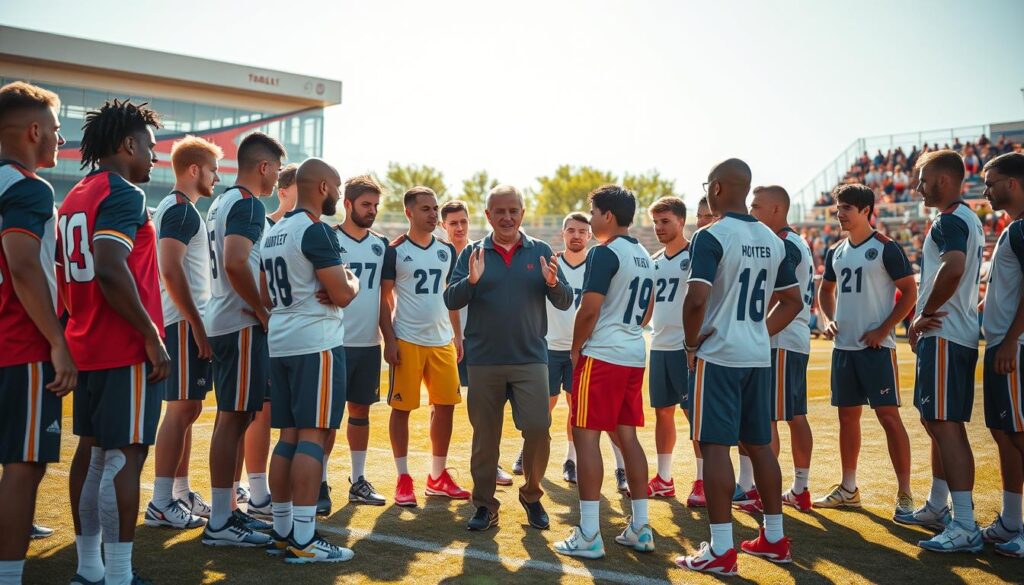
Teams now try to build cohesion through forced socialization. They have team dinners, gatherings, and trust-building exercises. It’s like summer camp for millionaires, with awkward icebreakers and the fear of being traded.
Studies show that this bonding is important. Teams with less than 20% new players have better efficiency ratings. Knowing your teammate’s favorite passing spot can make a big difference.
| New Player Minutes | Offensive Efficiency | Defensive Coordination | Overall Team Rating |
|---|---|---|---|
| Below 20% | 112.4 | 104.7 | 58% above average |
| 20-35% | 108.9 | 107.2 | 22% above average |
| 35-50% | 105.3 | 110.1 | 15% below average |
| Above 50% | 101.8 | 113.6 | 42% below average |
Now, teams use social network mapping to understand their dynamics. They track who eats with whom and who follows whom on Instagram. It’s all about building a strong team.
High turnover can really hurt a team’s efficiency. It’s like trying to build IKEA furniture without the right tools. You might get something, but it might not last.
So, when you see players dancing at a team dinner, remember it’s not just for fun. It’s about building chemistry, one awkward dance move at a time.
Quotes from Locker Room
Austin Rivers once said “that’s fucking nuts” about players joining their ninth team. His honest words cut through the usual PR talk about welcoming new faces and smooth integration.
Gregg Popovich’s words are even more striking. He said a player who hasn’t gotten over themselves can ruin a whole season. This advice is key to understanding the team impact of new players.
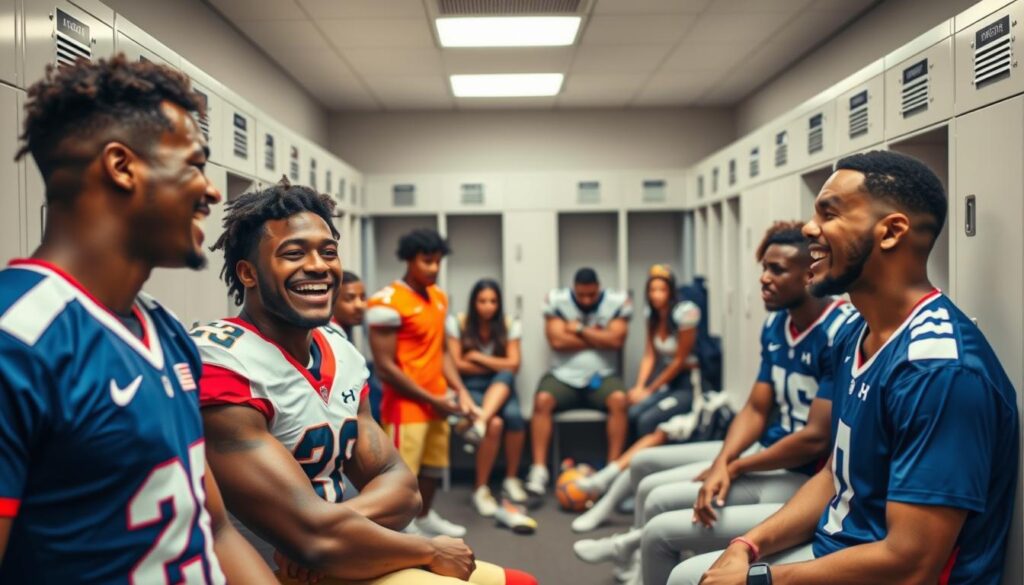
After a loss, listen to any post-game press conference. The coded language is clear. “We need to get on the same page” really means “the new guy keeps messing up the plays.”
Research backs up what veterans know. Studies show performance drops by 23% with new team members. The team impact isn’t just emotional – it’s seen in missed plays and defensive failures.
It’s ironic: athletes only talk about good chemistry when they win. Nobody asks the 100-loss team about their camaraderie.
This raises a big question: does chemistry lead to winning, or does winning create chemistry? The answer seems to be both – success builds camaraderie, and camaraderie leads to more success.
But how do you measure chemistry? MLB isn’t using fancy technology to track it. Workplace psychology offers some tools, but they can’t catch the side-eye when a veteran watches new faces struggle.
The real truth is in the unguarded moments. The complaints during warm-ups. The hesitant high-fives after forced celebrations. These small moments show more about team impact than any interview.
Chemistry isn’t built through trust falls or team dinners. It’s created through shared struggles and respect earned on the field. The new faces either fit in or become another failed experiment.
Early Season Chemistry Indicators
Spotting team chemistry issues early is like reading tea leaves in a hurricane. The subtle signs tell us everything. Players celebrating together after wins versus those sprinting for separate exits. Shared laughter during film sessions versus uncomfortable silences.
Coaches now use advanced methods to measure cohesion. They track off-court relationships with social network mapping. They also try to quantify happiness to see if it leads to better performance. Some teams even use kangaroo courts to air grievances before they fester.
The data from Evan Miya’s research shows what we instinctively know: roster turnover hurts teams. New players take time to make an impact. Teams with more returning players do better than those rebuilding.
Smart organizations invest in building chemistry, even if it’s hard to measure. The Spurs’ culture of respect and the Rays’ themed road trips are examples. These activities might seem small but can add half a win, like found money.
Chemistry is the last mystery in sports. We can measure shooting percentages and defensive rotations. But measuring trust and camaraderie? That’s a puzzle even the best analytics teams can’t solve.