Ervin Torres needed only a few minutes at Q2 Stadium to turn years of development work into a visible first-team result.
The 18-year-old midfielder entered Austin FC’s July 22, 2026, match against Seattle Sounders FC in the 84th minute with the score tied 1-1. Two minutes later, Torres helped create Myrto Uzuni’s go-ahead goal. In first-half stoppage time, he supplied another assist as Christian Ramirez completed a 3-1 victory.
Those were Torres’ first two MLS goal contributions. They arrived in Austin’s first league match after a two-month FIFA World Cup break, in front of 20,738 supporters and during the club’s 96th consecutive MLS home sellout. More important than the timing was what his performance represented.
Torres is not a young player acquired from another MLS academy or imported after developing abroad. He is a Laredo native who entered Austin FC’s youth system at the U-14 level in 2020, progressed into Austin FC II, earned a first-team debut and signed a Homegrown contract. His breakthrough gave the club its clearest proof that a player identified and developed within Texas can move through every level of the organization and affect an MLS result.
For Austin FC, that is a larger development story than two assists in one match.
Two Late Assists Made The Pathway Visible
Austin led Seattle through Ilie Sánchez’s 12th-minute header before Paul Rothrock equalized in the 26th minute. The match remained tied deep into the second half, leaving Austin in danger of opening the post-World Cup portion of its schedule with a frustrating home draw.
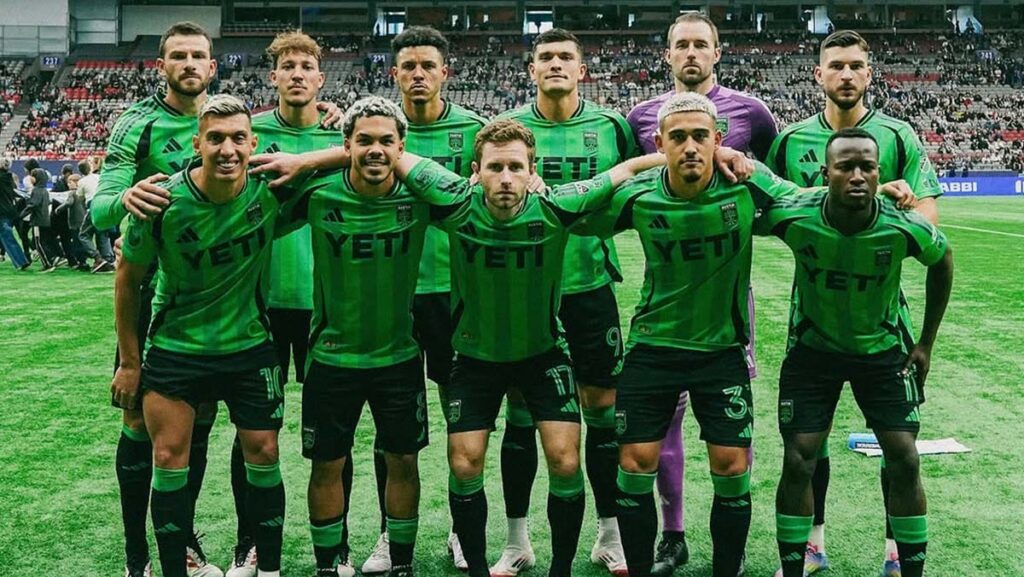
Torres changed the rhythm almost immediately after entering.
On the first decisive play, he combined with Ilie Sánchez before Uzuni scored in the 86th minute. Torres then found Uzuni during the stoppage-time sequence that ended with Ramirez scoring in his 200th MLS regular-season appearance.
The official Austin FC match report credited Torres with both assists and identified them as his first career MLS goal contributions. The club’s 3-1 win came on a 95-degree night at Q2 Stadium and gave Austin an encouraging restart after the long league interruption.
Torres became only the fourth teenager in MLS history to record multiple assists in a match as a substitute, according to reporting from the Laredo Morning Times. The achievement carried added local weight in Laredo, where his rise offers a direct connection between South Texas soccer and the state’s MLS infrastructure.
One appearance does not establish a full professional career. It does show that Torres can process a match quickly, create under late-game pressure and contribute against an experienced opponent without needing a long adjustment period.
That is the type of evidence development systems eventually have to produce. Academy rankings, youth tournament results and training reports matter inside a club. A late contribution in an MLS match makes the pathway understandable to supporters, young players and families across Texas.
Torres Followed Every Step Austin FC Built
Torres joined Austin FC’s academy in fall 2020, when he entered the U-14 team. He later earned selection to the 2023 MLS NEXT All-Star Game and began receiving professional minutes with Austin FC II.
He signed his first professional contract with the second team as a 16-year-old. Before that contract, Torres had already appeared during Austin FC II’s 2023 MLS NEXT Pro championship season and had represented the United States at the U-16 youth international level.
The second-team stage was central to his progress. Torres accumulated competitive minutes against older and more physically developed players rather than moving directly from academy soccer into the first-team environment. Austin FC’s current player profile credits him with 59 MLS NEXT Pro appearances, 10 goals and six assists.
His MLS debut came on October 19, 2024, when he played the final seven minutes of Austin’s 3-2 win over the Colorado Rapids. At 16 years and 340 days old, Torres became the second-youngest player to appear in an MLS match for Austin FC.
That debut carried another distinction: Torres became the first player to represent the club at academy, second-team and first-team levels.
Austin rewarded his progression with a Homegrown contract in November 2025. The agreement is guaranteed through the 2028 season and includes club options for 2029 and 2030. Sporting director Rodolfo Borrell described Torres at the time as a player who had progressed successfully through each stage of the club’s pathway.
The Seattle performance turned that organizational language into something measurable. Torres did not merely reach the senior roster. He helped decide a senior match.
Why Laredo Gives The Story Wider Texas Meaning
Austin FC’s homegrown strategy is often viewed through Central Texas because the first team, academy and second team operate from the Austin area. Torres’ background stretches the story south to Laredo, more than 230 miles from Q2 Stadium.
That distance matters in a state where player identification can be shaped by geography. Texas has a large youth soccer population, but talent is spread across major metropolitan areas, border communities and smaller regional markets. Families outside Austin, Dallas and Houston often face longer travel requirements to reach elite training, showcases and professional academy environments.
Torres gives the pathway a recognizable South Texas example. His progression suggests that Austin FC’s scouting and development reach can extend beyond the immediate metropolitan area when the organization identifies a player early and creates a structured route through its teams.
The story carries particular weight for Laredo because the city has a long soccer culture without a top-division professional club of its own. Local players often have to move into larger development networks to reach MLS, college soccer or national youth teams.
Torres does not represent every young player in South Texas, nor does one success remove the region’s access challenges. His rise gives families a concrete reference point. A player from Laredo entered an MLS academy, earned second-team minutes, signed a professional contract and created two first-team goals at Q2 Stadium.
That sequence is more persuasive than broad promises about opportunity. It shows where the steps occurred and how long the process required.
Austin FC II Is Doing More Than Filling A Schedule
Austin FC II began play in MLS NEXT Pro to connect the academy with the first team. Torres’ career shows why that middle level matters.
Youth players often face a difficult transition between academy competition and MLS. The technical ability that creates chances against players of the same age may not immediately transfer against professionals who are stronger, faster and more experienced. A second team gives prospects regular exposure to those demands without requiring the first-team coach to use league matches as a development laboratory.
Austin FC II’s 2026 roster reflects that purpose. Five first-team players entered the season on loan agreements that allowed them to appear for the second team, and eight academy players joined on amateur agreements. Eleven current or former academy players were included across the broader Austin FC II group.
The club has described the structure as a way to place each player at the competitive level that best fits his development at a particular point in the season. Torres moved through every version of that system: academy player on an amateur agreement, Austin FC II professional, short-term first-team call-up and full Homegrown player.
That progression allowed Austin to monitor his readiness without forcing a permanent jump too early. Short-term agreements gave Torres access to first-team matchday environments during 2025. His Homegrown contract then created a longer period for the club to manage his minutes between MLS and MLS NEXT Pro.
The Seattle appearance showed how that flexibility can benefit the first team. Torres entered as a substitute rather than carrying the burden of a starting role. He faced a tired defense, played with urgency and supplied qualities Austin needed late in the match.
A development system gains credibility when it can produce a player for a specific first-team role, not merely place academy names on the roster.
The Breakthrough Came During An Important Club Reset
Austin’s July 22 victory was its first MLS match after the 2026 World Cup break. The club entered the second half of the season trying to climb from the lower portion of the Western Conference and create a clearer path toward the playoffs.
Seattle arrived at Q2 Stadium sitting sixth in the conference with 24 points. Austin needed more than a ceremonial return to league play. It needed a result that could create momentum after two months without an MLS match.
Torres’ impact gave the win another layer. Austin had already added Polish winger Przemysław Płacheta and adjusted parts of its roster during the break. A teenage academy product became the decisive substitute instead of a veteran signing.
That does not mean Torres should immediately start every match or carry the club’s attacking burden. Young players develop unevenly, and first-team minutes should follow performance, physical readiness and tactical fit.
His two assists should earn him a longer look. Austin’s coaching staff now has evidence that Torres can provide energy, vision and direct attacking involvement late in matches. Opponents will adjust once more film becomes available, creating the next test in his development.
The following match offered a reminder of how quickly momentum can change. Austin lost 3-0 to Houston Dynamo FC on July 25 at Shell Energy Stadium. Torres’ Seattle contribution did not solve the club’s broader inconsistency. It gave Austin another internal option during a season that still requires improvement.
Austin Must Turn One Success Into A Repeatable Process
A single homegrown breakthrough is meaningful, but the larger test is whether Austin FC can repeat the process with different types of players.
Torres joins Owen Wolff and Micah Burton among players who signed Homegrown contracts after entering Austin’s academy. Each player’s route has been different. That variation is useful because a productive academy should not depend on one position, one age group or one exceptional prospect.
Austin’s academy reported several signs of depth during the 2024-25 season. Its U-18 and U-16 teams won division titles, three age groups qualified for the MLS NEXT Cup Playoffs and multiple academy players made Austin FC II debuts. Torres and Burton received U.S. youth national-team call-ups during the same period.
The next step is consistent conversion. Academy trophies can show collective quality, but the first team needs players who can fill real roster roles. Some may become starters. Others may provide depth, earn transfer value or reduce the need for outside acquisitions.
A productive local pathway can carry financial value under MLS roster rules. Homegrown players occupy supplemental roster positions and can give clubs cost-controlled depth. That creates room to direct salary spending toward positions that are harder to fill internally.
The sporting value is equally important. Players who develop inside the club already understand its training environment, terminology and expectations. They can create stronger connections with supporters, particularly when their backgrounds represent different parts of the state.
Torres gives Austin a first clear example of the complete academy-to-impact sequence. The responsibility now falls on the club to prove that his rise is the start of a pattern rather than an isolated success.
Why Torres’ Night Matters Beyond Two Assists
The most important part of Ervin Torres’ breakthrough was not the statistical rarity of two assists from an 18-year-old substitute. It was the route that placed him on the field.
A Laredo player joined Austin FC at U-14 level, tested himself in MLS NEXT, gained professional experience with Austin FC II, earned short-term first-team opportunities and secured a long-term Homegrown contract. Six years after entering the organization, he influenced an MLS match in front of a sold-out crowd.
That path gives Austin FC a development story rooted in Texas rather than built around an outside acquisition. It gives young players in South and Central Texas a visible model. It gives the club evidence that its academy and second team can produce first-team value.
Torres still has to earn more minutes, handle the physical demands of MLS and prove that his Seattle performance can translate into consistent contributions. His breakthrough should be treated as an opening rather than a finished achievement.
Austin FC needed that opening. Professional academies are judged by the quality of their facilities and coaching, but their public credibility comes from players who reach the first team and matter once they arrive.
On July 22, Torres mattered. His two late assists changed a match, lifted Austin after the World Cup break and gave the organization its strongest Texas-built player-development story yet.